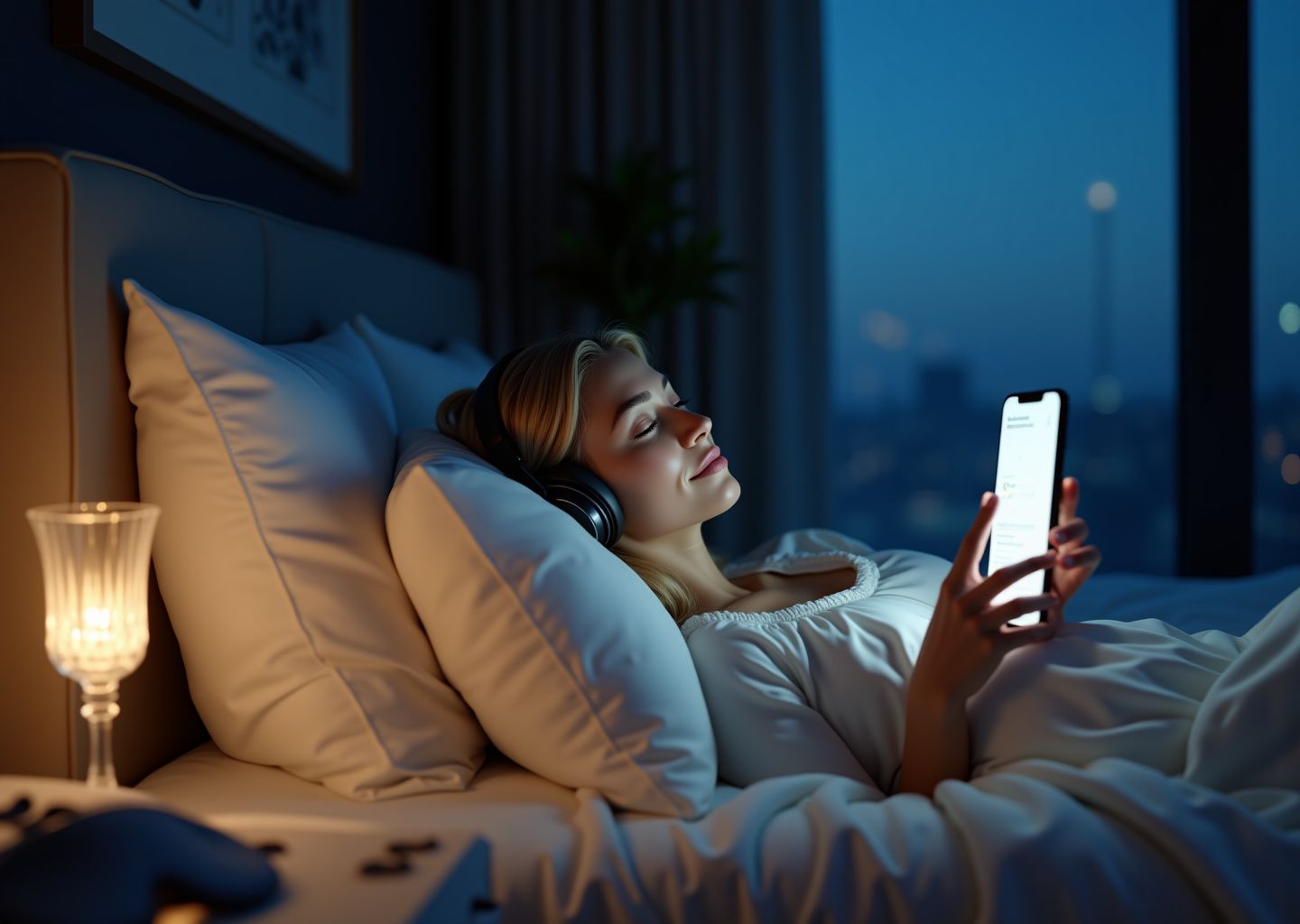
Many people use ASMR whispering videos to relax before bed, while others find the sounds irritating or anxiety‑provoking. This article explains the neuroscience and psychological reasons behind those opposing reactions, and then explores evidence‑based CBT‑I strategies, bedtime routines, and lifestyle changes that safely integrate ASMR into a practical plan to overcome insomnia.
Why ASMR whispering can soothe sleep and why it can irritate others
You’ve probably seen them on YouTube or TikTok. Someone whispering softly into a microphone, tapping on objects, or crinkling paper. This is ASMR, or Autonomous Sensory Meridian Response. It’s often described as a pleasant, static-like tingling sensation that starts on the scalp and moves down the back of the neck. But for many, especially those seeking sleep, the tingle isn’t the main goal. The real prize is the profound sense of calm and relaxation that these sounds can trigger. Whispering is one of the most common ASMR triggers because it mimics sounds of closeness and care, activating brain regions associated with comfort and safety. Psychologically, it feels like someone is gently tending to you, which can lower defenses and quiet a racing mind. Physiologically, this response isn’t just a feeling; it’s a measurable shift in your body’s state.
Research is finally catching up to what millions of viewers have known for years. Studies show that for those who experience it, ASMR can have a real impact on the body. A landmark study in 2018 by Poerio et al. found that participants watching ASMR videos showed significant reductions in their heart rates, comparable to the effects of mindfulness or music therapy. This backs up earlier findings from a 2015 study where 80% of participants reported that ASMR improved their mood. The mechanism seems tied to the release of neurochemicals like dopamine, oxytocin, and endorphins, the same hormones involved in bonding and feeling good. A 2024 study using EEG to measure brain activity even found that ASMR could help the brain recover from mental fatigue, suggesting it does more than just relax you; it may help restore cognitive balance. These effects create an ideal internal environment for sleep by reducing the anxiety and physical tension that so often keep us awake.
But not everyone feels the calm. Your personal reaction to whispering videos depends heavily on a mix of personality, biology, and even the technology used. People who score higher on the personality traits of Openness to Experience and Neuroticism are more likely to experience ASMR. This might be because they are more receptive to new sensory experiences and also more actively seeking ways to manage anxiety. There’s also evidence suggesting a link to higher levels of empathy. Demographically, the average viewer is between 25 and 34, and while people of all genders enjoy ASMR, women make up about 60% of its creators. The technical quality of the audio is also a huge factor. Many ASMR artists use binaural microphones, which record sound in a way that mimics human hearing. When you listen with headphones, it creates an immersive, three-dimensional soundscape that makes it feel like the person is in the room with you. This sense of personal attention and presence is a key part of the experience for many.
On the other hand, for some people, the same soft whisper that soothes one person can be intensely irritating. This isn’t just a matter of preference; it can be rooted in specific auditory processing conditions. One of the most common reasons for a negative reaction is misophonia, a disorder where specific sounds trigger an immediate and powerful emotional response of anger, disgust, or panic. For someone with misophonia, the soft, wet sounds of whispering or mouth sounds can be unbearable. Another condition, hyperacusis, involves a heightened sensitivity to everyday sounds, making even quiet noises feel overwhelmingly loud and painful. Beyond these conditions, negative reactions can stem from psychological factors. If you have a history where whispering is associated with gossip or secrets, you might have a conditioned negative response. Poor audio mixing, like sharp sibilance (the “s” sounds) or a low hum from equipment, can also turn a supposedly relaxing sound into an annoyance that increases alertness instead of reducing it. If your negative reaction to certain sounds is severe and impacts your daily life, consider speaking with a therapist or audiologist who specializes in sound sensitivities.
Your mindset and environment also play a critical role. Listening to a whispering video with the specific goal of winding down for sleep is a completely different experience from hearing similar sounds unexpectedly. When you intentionally choose to engage with ASMR as a pre-sleep tool, you are priming your brain to relax. You’re in a safe, controlled environment, and you’ve given your mind permission to let go. In contrast, hearing faint whispering when you’re home alone at night and not expecting it would likely trigger your brain’s threat-detection system, spiking your heart rate and flooding you with adrenaline. This highlights the importance of intention. ASMR works best for sleep when it’s a deliberate part of your wind-down routine, not a random sound you stumble upon.
So, how can you tell if ASMR is a helpful tool for you or a counterproductive one? Pay close attention to your body’s immediate, unfiltered reaction.
- Helpful indicators include a feeling of warmth or heaviness in your limbs, your breathing naturally slowing and deepening, your eyelids feeling heavy, and a general quieting of your internal monologue. You might feel a pleasant “fuzziness” in your brain as you drift away from anxious thoughts.
- Counterproductive indicators are just as clear. You might feel your muscles tense up, particularly in your jaw, neck, or shoulders. You could notice an increase in your heart rate, a feeling of irritation or even anger, and a heightened sense of alertness. If you find yourself focusing on the sounds with annoyance or your mind becomes more active with intrusive thoughts, it’s a sign that this particular trigger, or perhaps ASMR in general, isn’t right for you at this moment.
While the body of research on ASMR has grown to over 100 peer-reviewed studies, it’s important to acknowledge its limitations. Much of the data relies on self-reported feelings of relaxation, and we still have a lot to learn about the long-term effects and how it stacks up against established treatments for insomnia. As a field, it’s still in its infancy compared to decades of sleep science. However, ongoing research continues to explore its potential, with studies, such as a 2024 analysis in Neuroscience of Consciousness, showing that audiovisual ASMR can have a greater impact than audio alone. For now, the best approach is personal experimentation, using the signals from your own body as the ultimate guide. You can find more information on the growing body of research at sites like ASMR University, which tracks the publication of new studies.
How to integrate ASMR safely into CBT I and bedtime routines
So, you’ve discovered that gentle whispers or soft tapping sounds help you unwind. The next step is figuring out how to use ASMR effectively without it becoming another sleep problem. The gold standard for treating chronic insomnia is Cognitive Behavioral Therapy for Insomnia (CBT-I), a structured program that helps you re-establish a healthy sleep pattern. ASMR isn’t a formal part of CBT-I, but it can be a useful tool if integrated thoughtfully into its framework. Let’s look at how to do that safely.
First, a quick refresher on the core parts of CBT-I. It’s not just about sleep tips; it’s a multi-component therapy that includes:
- Stimulus Control Therapy which aims to strengthen the connection between your bed and sleep.
- Sleep Restriction Therapy which limits your time in bed to the actual amount of time you sleep, increasing your sleep drive.
- Cognitive Therapy which helps you identify and change negative thoughts and beliefs about sleep.
- Relaxation Training which teaches you techniques to calm your mind and body.
- Sleep Hygiene Education which covers lifestyle and environmental factors that affect sleep.
ASMR fits most naturally into relaxation training, but it can influence the other components, for better or worse. Here’s how to make it work for you.
Using ASMR Within the CBT-I Framework
Think of ASMR as a supplement, not a replacement for core CBT-I principles. Its main job is to help you transition from a state of high alert to one of calm, making it easier for sleep to happen naturally.
Stimulus Control and ASMR
The goal of stimulus control is to make your brain associate your bed with sleep and nothing else. This means if you can’t fall asleep within about 20-30 minutes, you get out of bed. ASMR can be a helpful pre-sleep cue here. You can listen to a short ASMR video as part of your wind-down routine before getting into bed, or for the first few minutes once you’re under the covers. However, it becomes a problem if you lie in bed for an hour scrolling through videos or if you feel you absolutely cannot sleep without it. That makes ASMR a sleep crutch, which weakens your brain’s natural ability to initiate sleep. The rule is simple: use ASMR to prepare for sleep, not to force it.
Relaxation Training and ASMR
This is where ASMR shines. It is, in essence, a modern form of relaxation training. You can use it on its own or pair it with classic techniques. For example, try listening to a simple, rhythmic tapping video while you practice 4-7-8 breathing (inhale for 4 seconds, hold for 7, exhale for 8). Or, you can find a guided progressive muscle relaxation (PMR) video delivered in a whispering voice. The gentle audio can help you stay focused on the physical sensations of tensing and relaxing your muscles, pulling your attention away from anxious thoughts.
A Step-by-Step Protocol for Your Bedtime Routine
To use ASMR constructively, you need a plan. Here’s a simple protocol to follow:
- Set a Wind-Down Time. About 30-60 minutes before your scheduled bedtime, stop stimulating activities. This is when you dim the lights, put away work, and start your routine.
- Choose Your Session in Advance. Don’t start browsing YouTube in bed. Pick a 5-20 minute video from a trusted creator beforehand. Longer isn’t better; the goal is to trigger a relaxation response, not to be entertained all night. Set a sleep timer on your device so the audio shuts off automatically.
- Mind Your Devices and Volume. Use headphones to get the full binaural effect, which can be more immersive. For comfort, especially for side sleepers, consider soft sleep headbands with flat speakers. Hearing safety is crucial: always keep the volume low. A good rule of thumb is to set it just loud enough to hear clearly in a quiet room; if you can’t hear someone talking to you from a few feet away, it’s too loud. If you experience any ringing or fullness in your ears after listening, the volume was too high.
- Pair it with Another Technique. As mentioned, try pairing a 10-minute ASMR session with deep breathing or a brief guided imagery exercise. This builds your personal relaxation toolkit, so you’re not reliant on just one method.
Troubleshooting and Special Considerations
What if ASMR stops working or starts to cause problems? Don’t panic. This is common.
When ASMR Stops Working or Becomes Irritating
If you find your favorite triggers aren’t relaxing you anymore, you might be experiencing habituation. Take a break for a week and try other relaxation methods. You can also explore different types of triggers. If a sound starts to feel irritating, or if you find that focusing on quiet sounds leads to hypervigilance (a state of high alert), stop immediately. Forcing yourself to use a relaxation technique that causes stress is counterproductive. If any attempt to relax for sleep consistently results in a faster heart rate or racing thoughts, you may be experiencing sleep-related anxiety, which a CBT-I therapist can help you address.
Concerns About Dependency
It is possible to form a sleep association with ASMR, creating a psychological crutch where your brain expects these sounds to fall asleep. To avoid this, use ASMR strategically as a tool to help your body relax, not as a requirement that plays all night. Vary your routine: use ASMR some nights and a different technique, like reading or guided meditation, on others. The goal of CBT-I is to build confidence in your ability to sleep naturally. You can taper your ASMR use by gradually shortening the sessions or spacing them out until it’s just an occasional tool. A red flag that you may have formed a dependency is if the thought of sleeping without ASMR causes you significant anxiety.
Guidance for Other Conditions
If you have co-occurring conditions, you may need to be more selective.
- Anxiety or PTSD: Predictable, gentle, and non-verbal ASMR (like object tapping or sand cutting) is often best. Avoid roleplays that could be unintentionally triggering.
- Tinnitus or Hyperacusis: For some with tinnitus, certain ASMR frequencies can mask the ringing. For those with hyperacusis (a severe sensitivity to sound), many triggers could be irritating or painful. The key is to stay in control of the volume. Start very low and choose predictable, soft sounds over sharp, sudden ones. If any sound makes your symptoms worse, stop immediately and consult your audiologist.
- Misophonia: If whispering or mouth sounds are your triggers, avoid those videos entirely. There is a huge world of visual-only or object-sound ASMR that may work better for you.
Track Your Progress and Know When to Get Help
The only way to know if ASMR is truly helping is to track your sleep. Use a simple sleep diary, a core tool in CBT-I. Every morning, log when you went to bed, how long it took you to fall asleep (sleep latency), how many times you woke up, and how you felt upon waking. This objective data will show you whether your new routine is improving your sleep efficiency. If you’ve tried integrating ASMR and other techniques within a CBT-I framework and are still struggling after several weeks, it’s time to consult a board-certified sleep specialist or a therapist trained in CBT-I. They can provide a structured plan and help you overcome the specific obstacles keeping you from restful sleep. Digital CBT-I programs have also become a clinically validated and accessible option, often incorporating various relaxation tools and professional guidance.
Frequently Asked Questions about ASMR and sleep
Navigating the world of ASMR for sleep can bring up a lot of questions. As we’ve discussed how to integrate it into a healthy routine, you might still have some practical concerns. Here are answers to some of the most common questions we hear, grounded in current research and clinical best practices.
Is ASMR a proven treatment for insomnia?
No, ASMR is not a clinical treatment for insomnia disorder. Think of it as a relaxation tool, not a cure. Insomnia is a medical condition often treated effectively with Cognitive Behavioral Therapy for Insomnia (CBT-I), which targets the root causes of poor sleep. ASMR can help by temporarily reducing stress and anxiety before bed. Studies show it can lower heart rate and trigger feel-good hormones like oxytocin, making it easier for some people to drift off. But it doesn’t address the underlying thoughts and behaviors that perpetuate chronic insomnia. For more on this, you can read what experts say at Sleep Foundation or Psychology Today.
Red Flag: If you’ve had trouble sleeping at least three nights a week for over three months, it’s time to talk to a doctor or a certified CBT-I therapist.
What types of ASMR are best for sleep?
The best type is the one that you personally find relaxing and, most importantly, a little boring. The goal is to quiet your mind, not entertain it. Slow, predictable, and repetitive sounds are usually most effective. Think soft tapping, page-turning, or calm, monotonous speaking. Complex roleplays with intricate stories might keep your brain too engaged. While a 2024 study found that audiovisual ASMR is more potent for inducing tingles, audio-only content is often better for sleep to avoid blue light from screens.
Actionable Tip: Search for “unintentional ASMR” or “boring ASMR for sleep” to find content that is calming without being overly stimulating.
Can children and teenagers use ASMR for sleep?
Yes, with parental supervision. The calming effects can be beneficial for kids and teens who struggle with anxiety or have trouble settling down at night. The primary concern is screen time. The blue light from phones and tablets can suppress melatonin production and interfere with sleep. If your child or teen uses ASMR, encourage audio-only options or have them place the screen face down. It’s also important to ensure the content is age-appropriate and that ASMR is used as a supplement to, not a replacement for, a healthy bedtime routine.
Actionable Tip: Set clear rules. The device should not be in the bed, and a sleep timer should always be used.
Conclusions and practical next steps
We’ve journeyed through the tingling, whispering world of ASMR and its complex relationship with sleep. Now, it’s time to bring everything together and map out a clear path forward. The most important takeaway is that ASMR is not a one-size-fits-all solution for insomnia. For some, the gentle sounds of whispering or tapping can be a powerful relaxation trigger, activating brain regions associated with reward and calm, and helping to lower heart rate. Research from the past few years, including a notable 2024 study on mental fatigue, continues to show its potential for reducing stress and promoting a state conducive to sleep. For others, these same sounds can be irritating or even anxiety-inducing, a phenomenon known as misophonia, where specific sounds trigger a negative emotional response. This dual nature is the core of the ASMR experience; its effectiveness is deeply personal and depends on individual brain wiring and sensory preferences.
Understanding your own response is the first critical step. This doesn’t require an elaborate experiment. It’s about mindful exploration. Set aside a few minutes when you aren’t pressured to sleep and sample different types of ASMR triggers. Notice your physical and emotional reactions. Do you feel a sense of calm, a pleasant tingling sensation, or does your jaw clench with annoyance? Your body will give you a clear answer. If you find it relaxing, ASMR can become a valuable tool in your sleep toolkit, but it should be viewed as one component of a larger, more structured strategy, especially for those dealing with chronic insomnia. It’s not a replacement for foundational sleep hygiene or proven clinical treatments.
Instead, think of ASMR as a potential supplement to Cognitive Behavioral Therapy for Insomnia (CBT-I), the gold standard treatment for chronic sleep problems. CBT-I works by helping you reframe negative thoughts about sleep and change the behaviors that perpetuate insomnia. A relaxing ASMR session can fit perfectly into the “relaxation training” component of CBT-I, helping to quiet a racing mind before bed. It can also be used as part of the “stimulus control” technique, where you train your brain to associate the bed only with sleep. By listening to a short ASMR video in a comfortable chair before getting into bed, you can signal to your body that it’s time to wind down, making the transition to sleep smoother. The goal is to use ASMR to facilitate relaxation, not to become dependent on it to fall asleep.
If your sleep troubles persist for more than a few weeks and significantly impact your daily life, it’s a clear sign to seek professional guidance. A primary care physician or a certified sleep specialist can help rule out underlying medical conditions and recommend a structured treatment plan. Chronic insomnia is a medical condition, and while tools like ASMR can help manage symptoms, they don’t address the root causes in the way that a comprehensive, evidence-based program like CBT-I can.
Here is a prioritized action plan you can start using tonight to take control of your sleep.
-
Tonight: Try a 5-Minute Wind-Down Ritual.
Thirty minutes before your intended bedtime, put all screens away. The blue light from phones and tablets disrupts melatonin production, the hormone that signals sleep. Instead, find a comfortable place to sit and choose a short, 5-minute ASMR video with a trigger you find potentially calming, like soft tapping or gentle whispering. Don’t use this time to try to force sleep. The goal is simply to relax. Close your eyes, put on headphones at a low, comfortable volume, and focus on your breathing. Inhale slowly for four counts, hold for four, and exhale for six. Pair this controlled breathing with the ASMR sounds. This combination helps activate the parasympathetic nervous system, your body’s “rest and digest” mode, making it easier to transition into sleep when you get into bed. -
This Week: Establish a Consistent Sleep Window and Keep a Diary.
Your body’s internal clock, or circadian rhythm, thrives on consistency. For the next seven days, commit to going to bed and waking up at the same time, even on weekends. This is one of the most powerful things you can do to regulate your sleep-wake cycle. To track your progress and identify patterns, start a simple sleep diary. Each morning, jot down what time you went to bed, roughly how long it took you to fall asleep, how many times you woke up, what time you woke up for the day, and how you felt upon waking. This data will be invaluable for understanding your sleep and incredibly helpful if you decide to consult a professional. -
If Insomnia Persists: Seek Evidence-Based Help.
If after two to four weeks of implementing consistent sleep hygiene and relaxation techniques you are still struggling, it’s time to seek professional support. Don’t let insomnia become your new normal. Talk to your doctor about your symptoms and ask for a referral to a sleep specialist or a therapist trained in CBT-I. This is not a sign of failure; it’s a proactive step toward reclaiming your health. CBT-I is a structured program that has been proven to be highly effective for long-term insomnia relief, often more so than medication.
Ultimately, ASMR remains a fascinating and useful phenomenon for many people seeking relaxation and a better night’s sleep. As a tool for calming the mind and reducing pre-sleep anxiety, it has earned its place in the modern wellness landscape. However, it is a piece of the puzzle, not the entire picture. For those battling chronic insomnia, the most reliable path to restorative sleep lies in embracing evidence-based strategies, building healthy routines, and seeking professional care when needed. Your sleep is too important to leave to chance.
Sources
- Asmr Statistics: Reports 2025 – WifiTalents — Despite only 12% of ASMR videos explicitly touting health benefits, an impressive 75% of viewers experience significant relaxation and stress …
- Effects of ASMR on mental fatigue recovery revealed by EEG power … — This study explores the effectiveness of Autonomous Sensory Meridian Response (ASMR) as a novel intervention for alleviating mental fatigue.
- How much research has been done on ASMR? — I think it is safe to say that there are at least 100 published, peer-reviewed research studies about ASMR as of August 2024. The studies …
- ASMR for Sleep: How It Works and Triggers to Try – Sleep Foundation — ASMR has been shown to trigger feelings of pleasure and relaxation, which can increase hormones such as dopamine and oxytocin. As a result, ASMR has been shown …
- relaxing than nature? The impact of ASMR content on psychological … — Here, we demonstrated that audiovisual ASMR content has a greater impact on self-reported tingling sensations compared to audio-only content.
- [PDF] A Netnographic Analysis of ASMR Consumption on YouTube … — In this study, we investigate the patterns and perceived effects of ASMR consumption among individuals who self-identify as survivors of sleep and. Page 3 …
- Can ASMR Help You Sleep Better? – Psychology Today — The 2015 study found that 80 percent of participants with ASMR reported a positive effect on mood, and other research from 2018 found decreased …
- Predicting tingling sensations induced by autonomous sensory … — This study aimed to understand how tingling sensations (and, for comparison, pleasant feelings) that such videos induce relate to acoustic features.
Legal Disclaimers & Brand Notices
This content is provided for informational purposes only and is not intended to be a substitute for professional medical advice, diagnosis, or treatment. The discussion of medical conditions (such as insomnia, misophonia, hyperacusis, anxiety, and PTSD) and therapeutic approaches (such as Cognitive Behavioral Therapy for Insomnia or CBT-I) should not be interpreted as medical guidance. Always seek the advice of a qualified healthcare provider, such as a physician, audiologist, or certified CBT-I therapist, with any questions you may have regarding a medical condition, sound sensitivity, or treatment plan. Never disregard professional medical advice or delay seeking it because of something you have read in this article.
All product names, logos, and brands mentioned herein are the property of their respective owners.