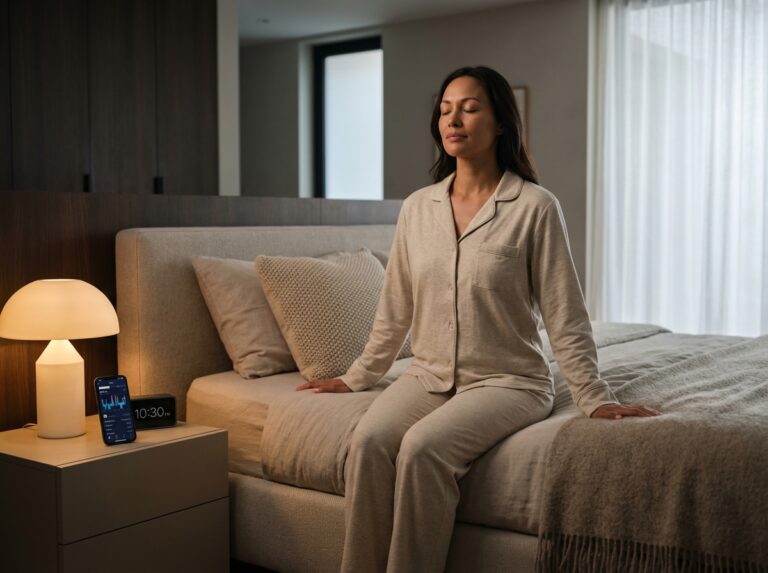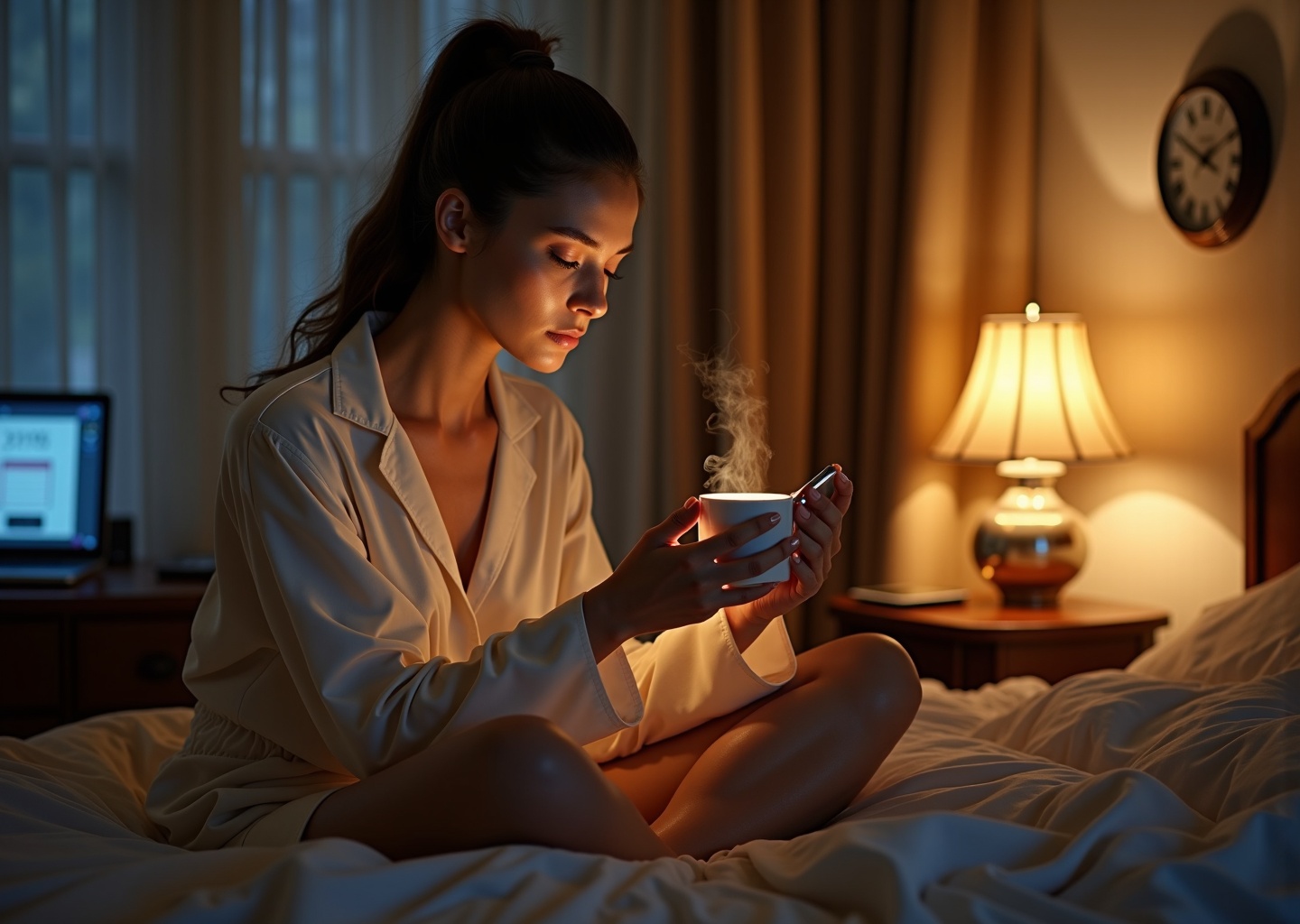
Revenge bedtime procrastination—choosing late-night leisure over sleep—is a common but often overlooked cause of poor sleep. This article explains why people delay sleep, how it links to insomnia, and practical evidence-based strategies including CBT-I techniques, bedtime routines, and lifestyle changes to help you fall asleep faster, stay asleep, and wake up refreshed, plus when to seek help.
Understanding revenge bedtime procrastination
You know the feeling. It’s 11 PM, your alarm is set for 6 AM, and every logical part of your brain is telling you to go to sleep. Yet, you find yourself opening another streaming episode, scrolling through social media, or getting lost in a rabbit hole of articles. This isn’t just staying up late; it’s a specific pattern known as revenge bedtime procrastination. It’s the decision to sacrifice sleep for leisure time because your daytime hours feel completely out of your control.
The term itself has a fascinating modern history. It first gained traction on Chinese social media around 2014, a direct response to the grueling “996” work culture where employees worked from 9 AM to 9 PM, six days a week. For them, the late-night hours were the only time they could reclaim for themselves. The phrase was popularized in the English-speaking world by writer Daphne K. Lee in a 2020 tweet, and it resonated deeply with millions. While the “revenge” label is new, researchers have been studying the underlying behavior for a while. A 2014 study introduced the more clinical term “bedtime procrastination,” defining it as voluntarily going to bed later than intended without any external reasons.
It’s important to understand that revenge bedtime procrastination is a behavioral pattern, not a formal medical diagnosis you’d find in the DSM-5. This distinguishes it from clinical sleep disorders. Insomnia disorder, for instance, is characterized by the inability to fall or stay asleep, even when you have the opportunity. People with insomnia often desperately want to sleep but can’t. In contrast, bedtime procrastination is about the choice to delay sleep. It’s also different from Delayed Sleep Phase Disorder, a circadian rhythm issue where a person’s internal body clock is naturally shifted several hours later, making it physically difficult to sleep and wake up at conventional times.
So, what drives this self-sabotaging behavior? Several psychological mechanisms are at play.
- Lack of Daytime Autonomy. This is the “revenge” part. When your day is packed with obligations to your boss, family, or school, you feel a profound lack of control. The late-night hours become a quiet rebellion, a way to assert that at least some part of the 24-hour cycle belongs to you.
- Compensatory Leisure Seeking. You’re trying to make up for a perceived deficit of free time. If you didn’t get a moment for yourself all day, you’ll steal it from your sleep schedule, because the need for downtime feels more urgent than the need for rest.
- Reward and Habit Loops. After a stressful day, the immediate dopamine hit from watching a favorite show or connecting with friends online feels incredibly rewarding. This reinforces the behavior, creating a powerful habit loop where the end of the day (the cue) triggers the desire to procrastinate (the routine) for that hit of pleasure (the reward).
- Decision Fatigue. Your willpower is a finite resource. After a full day of making decisions, your ability to exert self-control is depleted. Choosing the responsible option (sleep) over the easy, pleasurable one (scrolling) becomes much harder.
Your natural biological clock, or chronotype, can also play a role. People who are “evening types” or “night owls” are biologically predisposed to feel more alert and productive later in the evening. This can make it easier for them to slip into a pattern of bedtime procrastination, as their natural energy peak aligns with the time they should be winding down.
Certain groups are at a higher risk for this behavior due to the intense demands on their time. This includes shift workers with irregular schedules, caregivers, parents of young children, students facing academic pressure, and overloaded professionals. Remote workers, whose work-life boundaries have become blurred, are also highly susceptible.
Consider these common scenarios.
A 29-year-old software engineer works from 9 AM to 8 PM most days. He knows he should be in bed by 10:30 PM to feel rested, but he consistently stays up until after midnight watching streaming series. He tells himself it’s the only time he gets to truly relax and do something just for him, even though he struggles with fatigue and concentration at work the next day.
A 36-year-old mother of two young children spends her entire day juggling work deadlines, school pickups, and household chores. Once the kids are finally asleep at 9 PM, she feels a wave of relief. Instead of sleeping, she spends the next two hours scrolling through her phone, catching up on news and social media. It feels like her only moment of peace, but it leaves her irritable and exhausted when the kids wake her up at dawn.
These habits might seem harmless, but when they become chronic, they signal a real problem. The key signs include excessive daytime sleepiness, a noticeable drop in work performance, increased irritability or mood swings, and finding yourself dozing off in quiet moments. When these symptoms persist, it’s a clear indication that a behavioral pattern has evolved into a significant sleep problem. For this kind of issue, sleep medicine experts overwhelmingly recommend behavioral interventions and Cognitive Behavioral Therapy for Insomnia (CBT-I) as the most effective, first-line responses to reclaim your nights.
Why it happens and how it sabotages sleep
When you intentionally stay up late, you’re caught in a cycle where psychological needs hijack your body’s natural sleep systems. Understanding these mechanisms reveals why the habit is so difficult to break and how it directly undermines sleep quality, even before you turn out the lights.
Your sleep is regulated by two primary biological processes. The first is homeostatic sleep pressure: the longer you’re awake, the more a sleep-promoting substance called adenosine builds up in your brain, making you feel sleepier. When you procrastinate bedtime, you override this signal, creating a sleep debt that disrupts the next day’s cycle. The second system is your circadian rhythm, the 24-hour internal clock governing your sleep-wake cycle. This clock is highly sensitive to light. When you expose your eyes to bright light late at night—especially the blue-wavelength light from phones, tablets, and computers—you send a powerful signal to your brain that it’s still daytime. This exposure actively suppresses the release of melatonin, the hormone that tells your body it’s time to sleep. Research shows that just a couple of hours of screen time before bed can delay your natural melatonin surge by up to 90 minutes, making it physically harder to fall asleep when you finally decide to.
This combination of emotional need and depleted willpower creates a powerful habit loop. The cue is the end of a long, restrictive day. The routine is picking up your phone or turning on the TV. The reward is an immediate hit of dopamine from entertainment, social connection, or the simple pleasure of unstructured time. Every time you complete this loop, you strengthen the neural pathway, making the behavior more automatic and harder to resist the next night. This is how a conscious choice to stay up for an hour evolves into a chronic pattern that consistently delays when you fall asleep.
The consequences of this cycle are significant and measurable. The most immediate impact is a consistent reduction in total sleep time. Your sleep may also become more fragmented as your misaligned circadian rhythm struggles to maintain deep, restorative sleep. Over time, this pattern can progress toward a state that mirrors clinical insomnia. You can track this progression with a few key metrics.
- Sleep Latency: If it consistently takes you more than 30 minutes to fall asleep after getting into bed, it’s a sign that your body is not ready for sleep at that time.
- Wake After Sleep Onset (WASO): Waking up during the night and staying awake for a total of more than 30 minutes indicates fragmented, poor-quality sleep.
- Daytime Impairment: This is the most critical sign. If you experience persistent fatigue, mood swings, difficulty concentrating, or an overwhelming need to nap, your late-night habits are officially sabotaging your waking life. An Epworth Sleepiness Scale score over 10 is a clinical indicator of significant daytime sleepiness.
The downstream effects ripple through every aspect of your health. Chronic sleep loss impairs memory consolidation, weakens your immune system, and disrupts the hormones that regulate appetite, often leading to weight gain and increased risk for metabolic issues. Your mood suffers, making you more prone to irritability, anxiety, and depressive symptoms. The good news is that this is not a permanent state. Because revenge bedtime procrastination is a behavioral pattern, it is highly reversible. By addressing the underlying behaviors and cognitions, you can systematically improve both your subjective feeling of restfulness and the objective quality of your sleep.
Practical step by step plan to stop and sleep better
You understand why you’re trading sleep for a few more hours of “me time.” Now, let’s build a concrete plan to reclaim your nights and your energy. This isn’t about willpower; it’s about strategy. Think of this as a 2 to 8-week project to rewire your habits, one night at a time.
Your First Step: Become a Sleep Detective (Week 1)
Before changing anything, you need to know what you’re working with. For one week, your only job is to observe and record. No judgment, just data. Get a simple notebook or use a notes app and track the following each day:
- Bedtime: What time did you actually get into bed with the intention of sleeping?
- Lights-Out Time: What time did you turn off the lights?
- Sleep Latency: Your best guess of how long it took you to fall asleep.
- Wake-Up Time: The time you got out of bed for the day.
- Evening Activities: What did you do for the 2-3 hours before bed? (e.g., watched Netflix, scrolled social media, worked, read).
- Screen Use: How much of that pre-bed time was spent on a phone, tablet, or computer?
This log is your baseline. It gives you the power to see what’s really happening and measure your progress. After a week, you’ll have a clear picture to start making targeted changes.
A Staged Plan to Reclaim Your Sleep
Now, we introduce changes gradually. Don’t try to do everything at once. Layer these strategies week by week.
Weeks 2-3: Build the Foundation
First, we address the core reasons for revenge procrastination and retrain your brain’s association with your bed.
- Schedule Protected Leisure Time. The urge for “revenge” comes from feeling deprived of personal time. So, schedule it earlier. Block out 30-60 minutes between 7:00 PM and 9:00 PM as non-negotiable you-time. This could be 7:30-8:15 PM for reading a novel, calling a friend, or working on a hobby. When you give yourself this time proactively, the desperate need to steal it from sleep diminishes.
- Implement Stimulus Control. Your brain needs to learn one thing: bed = sleep.
- The bed is for sleep and sex only. No scrolling, no watching TV, no working.
- If you are in bed and not asleep after about 20 minutes, get up. Go to another room and do something quiet and relaxing in dim light (like reading a dull book) until you feel sleepy, then return to bed. This breaks the cycle of frustrated wakefulness in bed.
- Set a fixed wake-up time. Every single day. Yes, even on weekends. This is the single most powerful anchor for your body’s internal clock (circadian rhythm).
Weeks 3-4: Consolidate Your Sleep Drive
Now we use a simplified version of a powerful CBT-I technique called Sleep Restriction. The goal is to increase your sleep efficiency—the percentage of time you’re in bed that you’re actually asleep.
- Look at your sleep diary. Calculate your average nightly sleep time. Let’s say it’s 6 hours.
- Set your new, temporary “time in bed” window to be that average. So, if you need to wake up at 6:30 AM, your new bedtime is 12:30 AM. This feels counterintuitive, but it builds a powerful drive to sleep, reducing time spent lying awake. Never restrict your time in bed to less than 5.5 hours.
- Once your sleep efficiency (Time Asleep ÷ Time in Bed) is consistently above 85-90% for a week, you can start adding 15 minutes to your time in bed by going to bed a little earlier. You continue this process until you find the amount of sleep that leaves you feeling rested.
Weeks 4-6: Manage Your Mind and Environment
With a stronger sleep drive, you can now tackle the mental and environmental triggers.
- Schedule a “Worry Time.” Set aside 15-20 minutes in the early evening to write down everything you’re worried about and brainstorm one next step for each. When those thoughts pop up in bed, you can tell yourself, “I’ve already dealt with that. I’ll handle it tomorrow.”
- Challenge Your Thoughts. Anxious thoughts fuel sleeplessness. Use a simple cognitive restructuring script.
The Thought: “If I don’t get 8 hours of sleep, I’ll be a wreck tomorrow and fail my presentation.”
The Reframe: “I’ve functioned on less sleep before. It won’t be my best day, but I can handle it. Being anxious about it now only makes it harder to sleep. Rest is still valuable, even if it’s not perfect sleep.” - Create a Buffer Zone. The last 30-60 minutes before bed should be a screen-free wind-down routine. Examples include gentle stretching, listening to calm music, taking a warm bath, or practicing progressive muscle relaxation.
- Manage Light. Get bright light exposure within an hour of waking up—sunlight is best. In the evening, dim the lights in your home and use blue-light filters or grayscale mode on your devices.
Weeks 6-8: Fine-Tuning and Maintenance
This is where you solidify your new habits and make them resilient.
- Be Tactical with Tech. Use app timers to lock you out of social media after 9:30 PM. Schedule “Do Not Disturb” to turn on automatically an hour before your target bedtime. The most effective rule? Charge your phone overnight in another room.
- Negotiate with Your Household. If you live with others, get them on board. A simple script can work wonders: “I’m really working on my sleep, and it would help me a lot if we could make the living room a screen-free zone after 10 PM. Can we try that?”
- Use Tiny Habits. If motivation dips, go small. Don’t aim for a perfect hour-long wind-down. Just commit to one tiny thing: “After I brush my teeth, I will put my phone on the charger in the kitchen.” Small wins build momentum.
Sample Progress Plan
Here’s how you might structure your first few weeks.
| Week | Focus | Key Actions | Metrics to Track |
|---|---|---|---|
| Week 1 | Assessment | Keep a detailed sleep diary. Change nothing. | Sleep Latency, Total Sleep Time, Daytime Energy (1-10) |
| Week 2 | Foundation | Set fixed wake time. Schedule 30 min of early leisure. Implement “bed for sleep only” rule. | Consistency of wake time, Sleep Latency |
| Week 3 | Consolidation | Continue Week 2 habits. Begin simplified Sleep Restriction based on diary average. | Sleep Efficiency (aim for >85%), Total Sleep Time |
| Weeks 4-6 | Mind & Environment | Add a wind-down routine. Practice “Worry Time.” Manage light exposure. | Subjective sleep quality, Daytime Energy (1-10) |
Your 3-Step Plan to Start Tonight
- Set Your Wake-Up Alarm.
Before you do anything else, decide on your wake-up time for tomorrow and set your alarm. Commit to getting out of bed when it goes off, no matter how tired you feel. This single action sets the foundation for your entire next sleep cycle. - Schedule One Wind-Down Activity.
Choose one simple, relaxing, screen-free activity that you will do for 15-20 minutes before you plan to get into bed. This could be gentle stretching, listening to a calming podcast, or sipping a caffeine-free tea. Put it on your schedule. - Create a Tech-Free Zone.
One hour before your target bedtime, put your phone away. Don’t just put it down; place it on a charger in another room. This physical barrier drastically reduces the temptation to scroll and allows your brain’s natural melatonin production to begin uninhibited.
When to Seek Professional Help
These strategies are powerful, but sometimes more support is needed. It’s time to consult a professional if:
- You’ve consistently tried these techniques for 6-8 weeks with little to no improvement.
- Your sleep problems are causing severe daytime impairment, affecting your job, relationships, or safety (such as feeling drowsy while driving).
- You suspect another underlying sleep disorder, like sleep apnea (indicated by loud snoring, gasping, or pauses in breathing) or restless legs syndrome.
- Your sleeplessness is accompanied by severe depression, anxiety, or suicidal thoughts.
When looking for help, search for a “behavioral sleep medicine specialist” or a licensed psychologist with certification in Cognitive Behavioral Therapy for Insomnia (CBT-I). Your primary care doctor can also be a good starting point for a referral.
Frequently Asked Questions
What exactly is revenge bedtime procrastination and is it the same as insomnia?
Revenge bedtime procrastination is the act of deliberately putting off sleep to get back some personal time that you feel you lost during a busy day. It’s a behavioral choice. You can go to sleep, but you choose not to. Insomnia, on the other hand, is a medical condition where you can’t sleep, even when you want to. While procrastination can lead to insomnia-like symptoms, its root is a conscious decision, not an inability to sleep.
- Practical Takeaway Tonight: Pause and ask yourself, “Am I staying up because I can’t shut my brain off, or because I don’t want this day to end?” Identifying the feeling behind your delay is the first step to addressing it.
- Red Flags: If you are in bed, trying to sleep, but lie awake for more than 30 minutes at least three nights a week, and this has been happening for three months or more, you may be dealing with chronic insomnia that warrants a professional opinion.
What causes it?
The primary cause is a lack of free time and autonomy during the day. People with high-stress jobs, long work hours, or demanding caregiving responsibilities are particularly susceptible. After a day of meeting everyone else’s needs, you finally get a quiet moment and want to use it for yourself, even at the expense of sleep. Your willpower is also drained after a long day, making it harder to choose the long-term benefit of sleep over the immediate reward of entertainment.
- Practical Takeaway Tonight: Schedule 20 minutes of protected “me time” earlier in the evening, between 7 and 9 PM. Read a book, listen to music, or work on a hobby. This can ease the pressure to find that time late at night.
- Red Flags: If your procrastination is fueled by persistent feelings of burnout, anxiety, or depression that impact your mood and functioning throughout the day, it’s important to speak with a mental health professional.
Is it just poor time management?
Not really. It’s more about a lack of autonomy than a simple scheduling problem. Many people who procrastinate at bedtime are actually very good at managing their time during the day because they have to be. The procrastination is an emotional reaction to a rigid, over-scheduled life. It’s less about a failure to plan and more about a deep-seated need to feel in control of at least a small part of your day.
- Practical Takeaway Tonight: Instead of trying to better manage your late-night hours, focus on reclaiming a small piece of your evening. Try doing something completely unproductive and enjoyable for 15 minutes right after you finish your main evening tasks.
- Red Flags: If you find yourself procrastinating on important tasks in all areas of your life, not just sleep, and it’s causing significant problems at work or in your relationships, it could be a sign of a larger issue that needs addressing.
Are screens the main culprit?
Screens are more of an accomplice than the main culprit. The desire to reclaim personal time is the motivation, and screens offer an easy, endlessly rewarding way to do it. They create a powerful cycle. You use them to decompress, but the blue light they emit suppresses melatonin, the hormone that helps you feel sleepy. This makes it physically harder to fall asleep when you finally decide to, reinforcing the late-night pattern.
- Practical Takeaway Tonight: Commit to making your bedroom a no-screen zone. Leave your phone to charge in the kitchen or living room. This single change creates a physical barrier to mindless scrolling in bed.
- Red Flags: If you feel anxious or irritable when you can’t access your phone, find yourself using it for longer than intended, and it’s interfering with your daily responsibilities, you may want to evaluate your relationship with technology.
Can naps help or hurt?
They can do both. A short “power nap” of 20 to 30 minutes in the early afternoon can be a great way to combat daytime sleepiness without harming your nighttime sleep. However, napping for too long or too late in the day (e.g., after 3 PM) can reduce your natural sleep drive. This makes you feel less tired at night, which can make it easier to justify staying up even later.
- Practical Takeaway Tonight: If you feel you must nap, set an alarm for 20 minutes and make sure it’s before 3 PM. This should give you an energy boost without sabotaging your bedtime.
- Red Flags: If you are so tired that you fall asleep unintentionally during the day, especially in situations like meetings or while driving, this indicates severe sleep debt and is a major safety concern that requires immediate medical evaluation.
How long will it take to change?
Changing a deep-rooted habit takes time and consistency. Expect to see small improvements within a couple of weeks, but it may take one to two months to establish a new, stable routine. You will have nights where you fall back into old patterns. That’s normal. The goal is gradual progress, not overnight perfection. Celebrate small wins, like getting to bed 15 minutes earlier than usual.
- Practical Takeaway Tonight: Focus on just one thing. Don’t try to overhaul your entire evening. Your single goal could be to get up at the same time tomorrow morning, no matter what time you go to bed tonight.
- Red Flags: If you’ve been making a consistent effort for more than two months and see absolutely no improvement in your sleep patterns or how you feel during the day, it may be time to seek professional help.
Will CBT-I work for this?
Yes, the techniques from Cognitive Behavioral Therapy for Insomnia (CBT-I) are highly effective for revenge bedtime procrastination. CBT-I directly targets the behaviors and thoughts that disrupt sleep. Strategies like stimulus control (using the bed only for sleep and intimacy) and cognitive restructuring (challenging the mindset that you “need” this late-night time) are perfectly suited to breaking the procrastination cycle.
- Practical Takeaway Tonight: Try the “20-minute rule” from stimulus control. If you’re not asleep within about 20 minutes of getting into bed, get out of bed. Do a quiet, non-stimulating activity in dim light until you feel sleepy, then return to bed.
- Red Flags: If your sleep problems are deeply intertwined with significant anxiety, depression, or past trauma, working directly with a therapist trained in CBT-I is a better option than trying to go it alone.
Should I use sleeping pills?
For this specific issue, sleeping pills are usually not the answer. They don’t address the behavioral choice to delay sleep. While they might force you to sleep earlier on a given night, they do nothing to solve the underlying need for personal time that drives the behavior. They can also come with side effects and a risk of dependency, making them a poor long-term solution.
- Practical Takeaway Tonight: Instead of a pill, create a simple, relaxing wind-down routine. Spend 15 minutes listening to calm music, doing gentle stretches, or sipping caffeine-free tea. This helps signal to your body and mind that the day is over.
- Red Flags: If you find yourself relying on over-the-counter sleep aids, prescription medications, or alcohol to fall asleep several times a week, it’s crucial to discuss this with your doctor to rule out other issues and find a safer approach.
How do I handle work schedules or children that limit daytime control?
This is the central challenge. Since you can’t always change the big constraints, focus on what you can control. The strategy is to sprinkle small moments of personal time throughout the day, rather than saving it all for the end. Schedule 10-minute breaks to step outside, listen to a favorite song, or just sit quietly. If you have a partner, negotiate for 30 minutes of uninterrupted time each evening. Reclaiming these small pockets of autonomy can reduce the urge to “binge” on free time at midnight.
- Practical Takeaway Tonight: Look at your calendar for tomorrow and block out one 15-minute appointment with yourself. Treat it as non-negotiable. This small act of reclaiming daytime control can lessen the need for nighttime rebellion.
- Red Flags: If your work culture demands constant availability and is causing chronic stress and sleep loss, it might be a systemic problem. If conversations with management about setting reasonable boundaries are unsuccessful, you may need to consider the long-term impact on your health.
Sources
- Correlation of Revenge Bedtime Procrastination with Academic … — The objective of this study was to determine the correlation between revenge bedtime procrastination and academic performance in undergraduate medical students.
- Bedtime procrastination – Wikipedia — Bedtime procrastination is a psychological phenomenon that involves voluntarily delaying going to bed despite the risk of foreseeable consequences the following …
- Bedtime procrastination: introducing a new area of procrastination — Its prevalence comes about in impressive figures showing, for example, that up to 46% of college students report to procrastinate on specific …
- The Association Between Bedtime Procrastination, Sleep Quality … — Globally, the prevalence of PSU among young people was reported at 23.3% before the pandemic; however, this rate notably increased to 34.5% during the pandemic …
Legal Disclaimers & Brand Notices
The content provided in this article is for informational purposes only and is not intended to be a substitute for professional medical advice, diagnosis, or treatment. Always seek the advice of a qualified healthcare provider, such as a behavioral sleep medicine specialist or licensed physician, with any questions you may have regarding a medical condition or before starting any new treatment or behavioral regimen.
All product names, logos, and brands mentioned, including those related to pharmaceutical products or medical devices, are the property of their respective owners.