Mouth taping has become a viral fix touted to improve breathing, reduce snoring, and boost sleep quality. This article examines what mouth taping is, the scientific evidence and potential risks, who should avoid it, and safer, evidence-backed insomnia treatments such as CBT-I, bedtime routines, and lifestyle changes to help you fall asleep, stay asleep, and wake refreshed.
Understanding Mouth Taping and Why It Became Popular
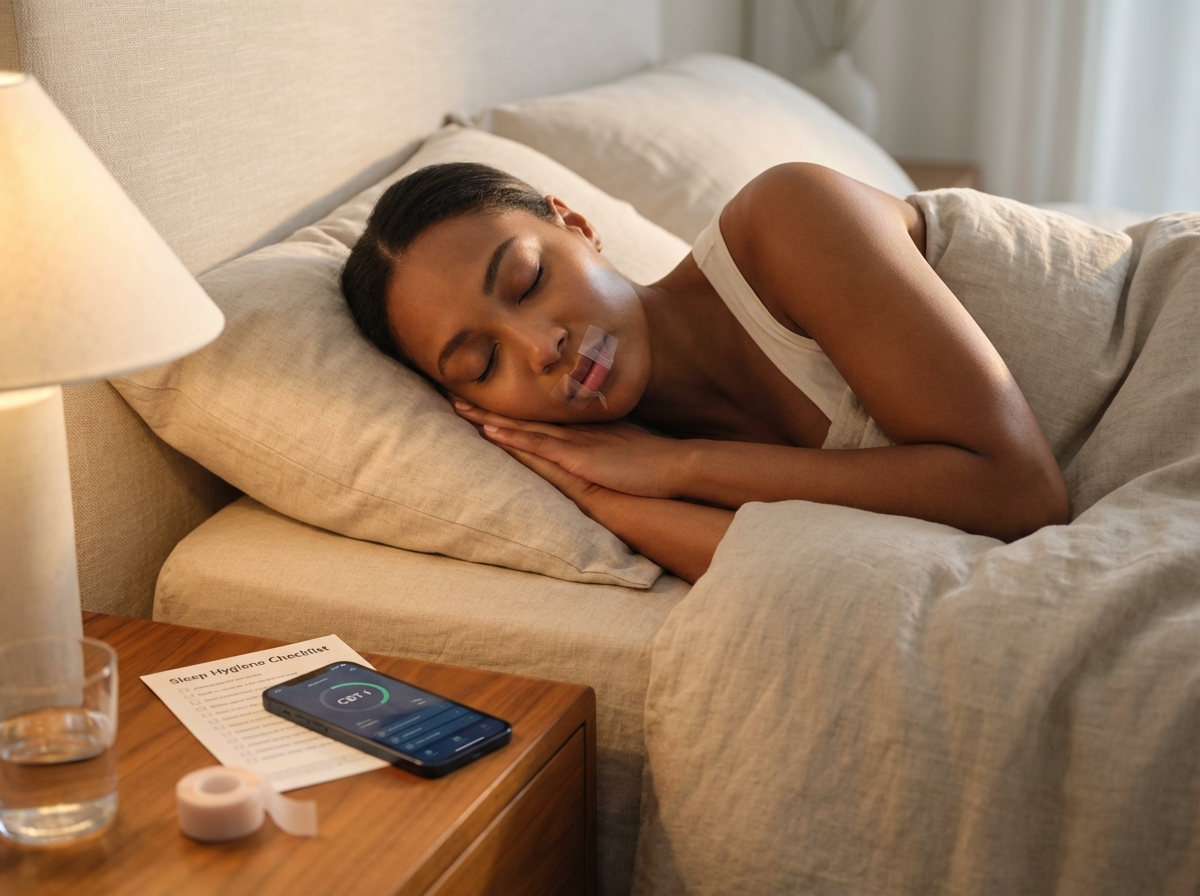
Mouth taping is a practice that involves placing a small piece of skin-safe adhesive over the lips before going to sleep. The primary goal is to ensure the mouth remains closed throughout the night, forcing the body to rely entirely on nasal breathing. Most people who try this use a single vertical strip of medical-grade tape or a specialized butterfly-shaped patch. The tape is not meant to be an unbreakable seal; rather, it serves as a gentle reminder for the jaw to stay in a resting position. Users often start by trying it for short periods during the day to acclimatize to the sensation before wearing it for a full night of rest.
The Biological Foundation of Nasal Breathing
The human body is biologically designed to breathe through the nose. The nasal passages act as a sophisticated filtration system, lined with tiny hairs called cilia that trap dust, allergens, and other particles before they reach the lungs. This process protects the respiratory system from irritation. Nasal breathing also provides essential humidification; as air passes through the nose, it is warmed and moistened. This prevents the throat and lungs from drying out, addressing a common complaint among mouth breathers.
Nitric Oxide Production
One of the most significant physiological benefits of nasal breathing is the production of nitric oxide. This molecule is produced in the paranasal sinuses. When we breathe through the nose, we carry this gas into the lungs where it acts as a vasodilator. It helps widen the blood vessels and improves the efficiency of oxygen exchange in the blood, leading to better oxygen delivery throughout the body. Mouth breathing bypasses this entire system, depriving the body of these natural benefits.
Respiratory Rate and Heart Variability
Breathing through the nose naturally creates more resistance than breathing through the mouth. This resistance slows down the respiratory rate and encourages deeper, more diaphragmatic breaths. Slower breathing can activate the parasympathetic nervous system—the part of the nervous system responsible for the “rest and digest” response. By staying in this state, the body may experience lower stress levels and improved heart rate variability during sleep. Conversely, mouth breathing is often associated with shallow, rapid chest breathing, which can sustain a state of low-level physiological stress.
The Rise of a Viral Wellness Trend
The sudden surge in the popularity of mouth taping is largely driven by social media platforms. Influencers on TikTok and Instagram frequently share videos of their nightly routines, presenting mouth tape as a secret hack for better health. These videos suggest that taping can lead to a more defined jawline, better skin, and improved athletic performance. The visual nature of the trend makes it highly shareable; seeing someone with a small piece of tape on their face creates curiosity and encourages others to try it.
Anecdotal testimonials have played a massive role in this movement. Many people report that they stopped waking up with a dry mouth or a sore throat after they started taping. Others claim they feel significantly more energetic during the day. While these personal stories are powerful, it is important to remember that personal success stories do not equal scientific proof. The wellness industry often adopts practices based on these narratives before researchers have time to conduct long-term studies.
Reviewing the Clinical Evidence through 2025
As of late 2025, the scientific community has taken a closer look at these claims. Peer-reviewed studies and clinical reports offer a more cautious perspective than social media influencers. A systematic review published in PLOS One in early 2025 examined the existing data on mouth taping A systematic review | PLOS One. The researchers found that while some small studies show a reduction in snoring for certain individuals, the overall evidence for improved sleep quality is limited. Many of these studies had small sample sizes and lacked the rigorous controls needed for definitive conclusions.
Sleep physicians and pulmonologists have raised concerns about the lack of long-term safety data. Experts from the Schulich School of Medicine noted in 2025 that there is no robust evidence to support the more extreme claims made by celebrities No evidence for viral mouth taping trend. They emphasize that while nasal breathing is beneficial, forcing it with tape may not be the right solution for everyone. Clinical reports from 2025 suggest that for some people, mouth taping can actually increase the effort required to breathe. This is especially true if the person has any form of nasal obstruction like a deviated septum or chronic congestion.
Distinguishing Between Insomnia and Breathing Patterns
It is vital to clarify what mouth taping can and cannot do. This practice targets the mechanical pattern of breathing; it is an intervention for mouth breathing and snoring, not a treatment for chronic insomnia. Insomnia is a complex sleep disorder often driven by cognitive and behavioral factors, including anxiety, hyperarousal, and poor sleep hygiene. Taping your mouth shut will not address the racing thoughts that keep you awake at night, nor will it fix a circadian rhythm disrupted by blue light or irregular schedules.
Sleep-disordered breathing is a separate issue from insomnia. While they can coexist, they require different approaches. Mouth taping might help a person who snores because their mouth falls open, but it will not help a person who cannot fall asleep due to stress. Confusing these two issues can lead to frustration. People with insomnia may try mouth taping hoping for a miracle cure, only to find that their inability to fall asleep remains unchanged.
Analyzing Common Online Claims
The internet is full of bold statements about mouth taping. Some are grounded in physiology, while others are purely speculative or dangerous.
Supported Claims
The claim that nasal breathing is superior to mouth breathing is well supported by medical science. The benefits of air filtration, humidification, and nitric oxide production are factual. It is also true that mouth taping can reduce or eliminate mouth snoring in some individuals by keeping the airway in a more stable position.
Plausible but Unproven Claims
Some claim that mouth taping improves oral health by preventing a dry mouth. This is plausible because a dry mouth can lead to an increase in bacteria and tooth decay. However, large-scale clinical trials have not yet proven that mouth taping significantly reduces the incidence of cavities or gum disease. Another claim is that it improves deep sleep architecture. While some small studies show promise, the data is not yet strong enough to be considered a medical fact.
Risky or False Claims
The most dangerous claim is that mouth taping can cure obstructive sleep apnea. This is false. Sleep apnea is a serious condition where the airway collapses or becomes blocked. Taping the mouth shut could potentially worsen the situation by removing a backup route for air. Another false claim is that mouth taping can change the bone structure of an adult face. While breathing patterns can affect facial development in children, there is no evidence that it can reshape an adult jawline.
Safety Evidence, Risks, and Alternatives
The current clinical evidence for mouth taping is limited. Most available data comes from small pilot studies or observational reports involving fewer than thirty participants. We still lack large randomized controlled trials that assess long-term safety or efficacy. Some research suggests a reduction in snoring for specific individuals, while other studies show no significant changes in sleep quality. A systematic review published in PLOS One noted that mouth taping offered no differences in some cases and discussed potential risks like asphyxiation if a person has a nasal obstruction. Experts at the Cleveland Clinic and other major institutions warn that the trend lacks the robust data needed for a general recommendation Is Mouth Tape Safe?.
Medical Contraindications and High Risk Groups
Mouth taping is not a one-size-fits-all practice. It can be dangerous for people with certain health conditions. You should never attempt mouth taping if you have known or suspected obstructive sleep apnea. This condition involves repeated stops in breathing during the night. Taping the mouth shut can prevent the body from taking a corrective breath through the mouth when the airway collapses.
Chronic Respiratory Issues
People with COPD or severe asthma should avoid this practice. These conditions already compromise breathing efficiency. Adding a physical barrier to the mouth increases the work of breathing and can lead to a dangerous drop in oxygen levels.
Nasal Obstruction
If you have a deviated septum, polyps, or recent nasal surgery, your nasal passages may not be clear enough to support your full oxygen needs. Acute illnesses like a cold, allergies, or sinus infection also make mouth taping unsafe. You must be able to breathe freely through your nose before considering any method that restricts mouth breathing. If your nose is blocked and you tape your mouth, you may struggle to get enough oxygen, leading to a rise in carbon dioxide levels in the blood.
Other Safety Concerns
Children should never have their mouths taped. They cannot always communicate distress or remove the tape themselves, and it can interfere with natural growth. Pregnant people with breathing issues or nasal congestion should also abstain due to the increased risk of gestational sleep apnea and hormonal congestion. Cognitive impairment or any condition that prevents a person from removing the tape quickly is a strict contraindication. People with claustrophobia may experience intense anxiety or panic attacks when their mouth is sealed.
Screening for Sleep Disorders (STOP-Bang)
Before trying any viral sleep hack, you must determine if you have an underlying sleep disorder. Many people who seek out mouth taping are actually suffering from undiagnosed sleep apnea. You can use the STOP-Bang framework to assess your risk.
S is for Snoring
Do you snore loudly? Is it loud enough to be heard through closed doors?
T is for Tiredness
Do you often feel tired or sleepy during the daytime? Do you find yourself nodding off during routine tasks?
O is for Observed Apnea
Has anyone ever noticed that you stop breathing or gasp for air while you sleep?
P is for Pressure
Do you have high blood pressure or take medication for it?
B is for BMI
Is your body mass index greater than 35?
A is for Age
Are you older than 50?
N is for Neck Circumference
Is your neck size larger than 16 inches for a woman or 17 inches for a man?
G is for Gender
Are you male?
If you answer yes to three or more of these questions, you are at high risk for obstructive sleep apnea. You should seek a referral for a formal sleep study, such as overnight oximetry or a full polysomnography in a lab. Using tape to mask symptoms like snoring can delay a life-saving diagnosis.
Acute Risks and Warning Signs
There are immediate physical risks associated with sealing the lips. Skin irritation is the most common complaint; the skin on the lips and around the mouth is very sensitive. Using the wrong type of adhesive can cause rashes or allergic reactions. There is also a risk of aspiration. If you need to vomit during the night, having your mouth taped shut can cause you to inhale the vomit into your lungs, which is a medical emergency.
Panic is another acute risk. Some people wake up feeling like they are suffocating, triggering a fight-or-flight response that leads to a racing heart and high blood pressure. If you wake up with chest pain or a racing heart, these can be signs that your body is not getting enough oxygen. If you feel any distress or difficulty breathing while the tape is on, you must stop immediately.
Harm Reduction for Nasal Breathing
If you are a healthy adult without contraindications and still want to encourage nasal breathing, follow safety protocols. Do not use duct tape, standard office tape, or industrial adhesives, as these can cause chemical burns or tear the skin. Only use medical-grade hypoallergenic tape or specialized mouth strips designed for this purpose.
The Wakeful Trial
Test the tape while you are awake. Wear it for thirty minutes while reading or watching television. This helps you get used to the sensation and ensures you can breathe comfortably through your nose. If you feel any anxiety or difficulty breathing, remove the tape immediately.
Skin Testing
Apply a small piece of the adhesive to your arm first. Wait twenty-four hours to check for a reaction. If your skin turns red or itchy, do not use that product on your face. Applying a small amount of petroleum jelly to the area around your lips can also protect the skin from the adhesive.
Easy Removal
Ensure you can remove the tape easily without using your hands if possible. Use a vertical strip that covers only the center of the lips. This allows for some airflow at the corners of the mouth if your nose becomes blocked. Never wrap tape entirely around the head.
Evidence Based Alternatives for Insomnia
Mouth taping is often marketed as a cure for poor sleep, but it does not address the root causes of chronic insomnia. Cognitive Behavioral Therapy for Insomnia (CBT-I) is the first-line treatment recommended by medical guidelines. It has robust evidence and long-term success rates.
Stimulus Control
This technique strengthens the association between the bed and sleep. You only go to bed when you are sleepy. You do not use the bed for work, watching TV, or scrolling on your phone. If you cannot sleep after twenty minutes, you leave the bedroom and do something relaxing in dim light until you feel tired again. This retrains your brain to see the bed as a place for sleep only.
Sleep Restriction
This involves limiting the time you spend in bed to the actual amount of time you are sleeping. It builds up sleep debt, which helps you fall asleep faster the next night. This helps increase your sleep drive and makes your rest more efficient.
Cognitive Restructuring
This helps you change negative thoughts about sleep. Many people with insomnia worry about the consequences of a bad night. CBT-I teaches you to challenge these thoughts and reduce sleep anxiety.
Relaxation Techniques
Progressive muscle relaxation and guided imagery can lower your physiological arousal. This makes it easier for the body to transition into sleep by lowering your heart rate before bed.
Treatments for Sleep Disordered Breathing
If your goal is to stop snoring or manage mild apnea, there are better options than tape. Continuous Positive Airway Pressure (CPAP) is the gold standard for sleep apnea. It uses a machine to keep your airway open with a steady stream of air. Oral appliances are another option; these are custom-fitted by a dentist to move the jaw forward and keep the airway clear.
Nasal Dilators and Strips
External nasal strips or internal dilators can physically open the nasal passages. These are small adhesive bands placed on the outside of the nose that physically lift the sides to open the airway. They do not carry the same risks as mouth taping because they do not block the mouth. An evaluation by an Ear, Nose, and Throat (ENT) specialist can determine if you have structural blockages like polyps or a deviated septum.
Myofunctional Therapy
This involves exercises for the tongue and throat muscles. Improving muscle tone can prevent the airway from collapsing. While the evidence is still growing, it is a safe and non-invasive approach.
Lifestyle Adjustments
Weight management can significantly reduce snoring and apnea symptoms. Positional therapy, such as sleeping on your side instead of your back, is also effective. Avoiding alcohol or sedating medications before bed can prevent the throat muscles from over-relaxing.
Breathing Retraining
Techniques like the Buteyko method or diaphragmatic breathing can help you transition to nasal breathing during the day. This often carries over into the night without the need for tape. Always consult a professional before starting these practices if you have underlying heart or lung issues.
Resources and Professional Referrals
Finding the right help is essential for long-term sleep health. You can start by looking for a board-certified sleep medicine clinic in your area. These clinics are staffed by experts who can diagnose a wide range of sleep disorders. If you are interested in CBT-I, you can search for certified therapists through the Society of Behavioral Sleep Medicine. There are also reputable online programs and apps like Sleepio or Somryst that provide structured CBT-I.
You should always consult a sleep specialist or your primary care provider before trying mouth taping. This is especially important if you have any risk factors for breathing disorders. Professional guidance ensures you are using a treatment that is both safe and effective for your specific needs. Relying on viral trends can be a distraction from the evidence-based care you might actually require.
Common Questions and Answers About Mouth Taping
Does mouth taping cure insomnia?
Mouth taping is not a treatment or a cure for insomnia. Chronic insomnia is a complex condition often driven by hyperarousal, anxiety about sleep, and learned behaviors that disrupt the sleep cycle. While nasal breathing can help activate the parasympathetic nervous system and promote relaxation, it does not address the underlying psychological or physiological causes of insomnia. For those struggling with long-term sleep onset or maintenance issues, Cognitive Behavioral Therapy for Insomnia (CBT-I) remains the gold standard of care. You should prioritize these evidence-based methods over viral trends that only address the physical act of breathing without tackling the root of the sleep disturbance.
Will mouth taping stop snoring?
Mouth taping may reduce the sound of snoring in some individuals by encouraging nasal breathing, but it does not resolve the underlying cause of the noise. Snoring occurs when air flows past relaxed tissues in the throat, causing them to vibrate. If your snoring is caused by mouth breathing, the tape might help quiet the room. However, if the snoring is a symptom of a narrow airway or nasal obstruction, taping the mouth could make breathing more difficult. It is important to remember that snoring is often a primary sign of obstructive sleep apnea. Using tape to mask the sound without a medical evaluation can be risky because it might hide a serious breathing disorder. You can find more information on the limitations of this practice in this review of sleep quality and mouth taping.
Is mouth taping safe if I think I have sleep apnea?
No, mouth taping is potentially dangerous if you have or suspect you have obstructive sleep apnea (OSA). In people with OSA, the airway collapses during sleep, leading to pauses in breathing and drops in blood oxygen levels. Taping the mouth shut removes a critical emergency backup for breathing when the nasal passage is insufficient. If you experience loud snoring, daytime fatigue, or gasping for air at night, you must seek a professional medical evaluation before trying any mouth breathing interventions. A sleep specialist will typically recommend an overnight oximetry test to check oxygen levels, a home sleep apnea test (HST) using portable sensors, or a full polysomnography study in a lab. You should never use tape to self-treat suspected apnea as it can lead to increased respiratory distress.
How do I choose tape and how should I apply it safely?
If you have been cleared by a doctor and want to try mouth taping, you should only use medical-grade hypoallergenic tape. Avoid using household tapes like duct tape or masking tape because the adhesives are too strong and can damage the delicate skin around the lips. Look for silicone-based adhesives which are designed for easy removal and sensitive skin. When applying the tape, you do not need to seal your entire mouth from corner to corner. Many experts suggest a vertical strip placed over the center of the lips. This allows for some air to escape through the sides of the mouth if you need to breathe suddenly. You should always perform a trial run while you are awake for at least thirty minutes to ensure you do not feel panicked or restricted.
Can mouth taping cause suffocation or aspiration?
The risk of suffocation is low for healthy adults with clear nasal passages, but the risk of aspiration is a serious concern. Aspiration happens when foreign material like stomach acid or vomit enters the lungs. If you become nauseated or vomit during the night and your mouth is taped shut, you may not be able to clear your airway quickly enough. This can lead to life-threatening lung infections or choking. Some research has discussed potential risks including asphyxiation in the presence of nasal obstruction as noted in this systematic review. You should never use mouth tape if you have consumed alcohol, taken sedatives, or feel unwell, as these factors slow your reaction time and increase the danger of airway complications.
Is mouth taping OK for children and pregnant people?
Mouth taping is generally contraindicated for children and pregnant individuals. Children have smaller airways and are still developing their respiratory patterns. Taping a child’s mouth can lead to oxygen deprivation and interfere with their natural growth. For pregnant people, the risk of gestational sleep apnea increases due to hormonal changes and physical pressure on the diaphragm. Nasal congestion is also very common during pregnancy, making mouth breathing a necessary survival mechanism at times. If you are pregnant and struggling with sleep or breathing, you should consult your obstetrician or a sleep specialist for safe alternatives like positional therapy or nasal strips rather than using adhesives to force nasal breathing.
How long before I see a benefit from mouth taping?
There is no established timeline for benefits because high-quality evidence for mouth taping is limited. Some people report feeling more refreshed or having a less dry mouth after just one or two nights. These anecdotal reports often focus on the immediate comfort of a moist mouth rather than a change in sleep architecture. Small studies have suggested that while mouth taping might improve some aspects of sleep for specific groups, many people see no difference in their overall sleep quality. According to current expert analysis, we do not have enough randomized controlled trials to say how long it takes to see meaningful health improvements. If you do not feel a positive change within a week, it is likely that mouth taping is not the right solution for your sleep concerns.
Can mouth taping help nasal congestion?
Mouth taping does not cure nasal congestion and can actually make the sensation of breathlessness worse. If your nose is blocked due to allergies, a deviated septum, or a cold, your body breathes through your mouth to ensure you get enough oxygen. Forcing nasal breathing when the nose is not clear can lead to panic and poor sleep quality. Instead of using tape, you should address the congestion directly. This might involve using saline rinses, nasal dilators, or seeing an Ear, Nose, and Throat (ENT) specialist to check for structural issues. Once the nasal passage is clear, you may find that you naturally switch to nasal breathing without the need for tape.
What should I do if tape causes skin irritation?
If you notice redness, itching, or a rash around your mouth, you should stop using the tape immediately. Skin irritation is a common side effect of the adhesives used in many sleep strips. You can try applying a thin layer of petroleum jelly or a specialized skin barrier cream around the lips before applying the tape, but this may prevent the tape from sticking properly. A better approach is to switch to a different type of medical tape, such as one made with gentle silicone. If the irritation persists, it is a sign that your skin is too sensitive for this practice. You might consider using a chin strap instead, which provides physical support to keep the mouth closed without using adhesives on the skin.
How does mouth taping compare to CPAP or oral appliances?
Mouth taping is a lifestyle hack with very little clinical backing, while CPAP and oral appliances are regulated medical treatments for sleep-disordered breathing. CPAP (Continuous Positive Airway Pressure) uses a machine to blow air into the throat, keeping the airway open. Oral appliances are custom-made by dentists to shift the jaw forward and prevent the tongue from blocking the throat. Mouth tape does neither of these things; it only encourages the lips to stay together. While some studies in The Journal of Physiology suggest that reducing mouth leak can improve the efficacy of other treatments, tape is not a substitute for medical devices. The following table summarizes the differences between these approaches.
| Feature | Mouth Taping | CPAP Therapy | Oral Appliances |
|---|---|---|---|
| Primary Function | Encourages nasal breathing | Keeps airway open with air | Physically shifts jaw/tongue |
| Evidence Level | Low (Anecdotal/Small studies) | High (Gold standard for OSA) | Moderate to High |
| Medical Supervision | None required (but recommended) | Required (Prescription) | Required (Dentist/Sleep Doc) |
| Safety Risks | Aspiration, skin irritation | Dryness, mask discomfort | Jaw pain, tooth movement |
How should mouth taping be combined with CBT-I and other insomnia strategies?
If you choose to use mouth taping, it should only be a small part of a much larger sleep health plan. It should never replace CBT-I if you have chronic insomnia. You can combine nasal breathing practices with relaxation techniques like diaphragmatic breathing or the Buteyko method during your wind-down period before bed. This helps prepare the body for rest without the risks associated with taping while asleep. If you are working through a CBT-I program, focus on your sleep schedule and stimulus control first. Once your sleep efficiency has improved and your anxiety about being in bed has decreased, you can then discuss physical breathing aids with your doctor. Always treat mouth taping as a secondary tool rather than a primary solution for poor sleep.
Improving your sleep is a journey that requires patience and the right tools. While it is tempting to follow the latest viral trend, your safety should always come first. Many sleep issues can be resolved with safe breathing practices and professional guidance. You do not have to struggle with poor sleep alone. By following a stepwise plan and seeking expert advice, you can find a sustainable way to rest and wake up feeling refreshed. Today is December 24, 2025, and there are more resources available now than ever before to help you achieve better sleep health.
References
- A systematic review | PLOS One – Research journals — Other studies showed that mouth taping offered no differences and even discussed potential risks including asphyxiation in the presence of nasal obstruction.
- Can Mouth Tape During Sleep Be Dangerous? – Houston Methodist — Evidence does not support that mouth taping enhances sleep quality, and findings regarding its impact on mild sleep apnea have been …
- No evidence for viral mouth-taping trend, sleep expert says — It has been recommended by many social media influencers and celebrities who claim it can lead to better sleep, enhanced oral health and anti-aging results. “It …
- Is Mouth Tape Safe To Use While Sleeping? – Health Cleveland Clinic — Mouth taping may seem promising, but it can actually cause more harm than good, especially if you snore or have sleep apnea.
- Breaking social media fads and uncovering the safety and efficacy of … — Other studies showed that mouth taping offered no differences and even discussed potential risks including asphyxiation in the presence of nasal …
- Is It Safe to Use Mouth Tape When Sleeping? – AdventHealth — Several studies have been conducted to assess the effectiveness of mouth taping in reducing snoring and aiding in the treatment of sleep apnea.
- Mouth taping: a little less conversation, a little more action, please! — Mouth taping was shown to be effective in improving sleep architecture. The authors reasonably conclude that mouth leak reduces the efficacy of …
- Mouth Tape for Better Sleep: Myth or Miracle? — We don't have a lot of good, quality evidence to support mouth taping. There are a handful of small studies that are not randomized or …
Legal Disclaimers & Brand Notices
The content provided in this article is for informational purposes only and does not constitute professional medical advice, diagnosis, or treatment. Always seek the advice of your physician or other qualified health provider with any questions you may have regarding a medical condition, sleep disorder, or respiratory concern. Never disregard professional medical advice or delay in seeking it because of something you have read in this article.
All product names, logos, and brands mentioned in this text are the property of their respective owners. All company, product, and service names used in this article are for identification purposes only. Use of these names, logos, and brands does not imply endorsement or affiliation.