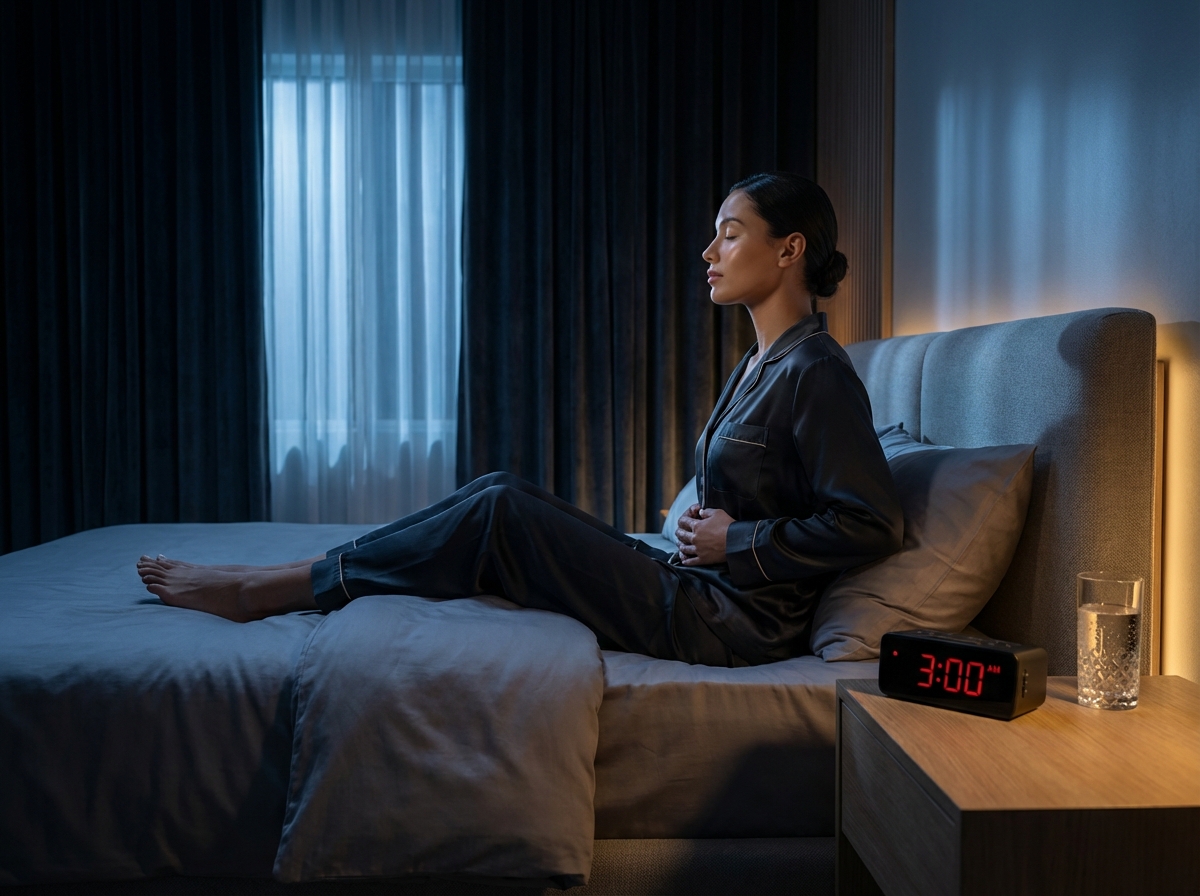
Waking at 2–4 AM is a common form of sleep maintenance insomnia that leaves people exhausted and anxious. This article explains why middle-of-the-night awakenings happen, the biology behind them, and the most effective practical strategies—especially CBT‑I, bedtime routines, and lifestyle changes—to help you fall back asleep and restore restorative night sleep.
Why People Wake at 3 AM: The science behind middle-of-the-night awakenings
The experience of staring at the ceiling while the digital clock glows with a 3 AM timestamp is a shared reality for millions of people. This specific window of time is not a coincidence. It is the result of how the human body structures rest and manages internal biological rhythms. Understanding why the brain decides to switch from deep slumber to full alertness requires a look at sleep architecture and the hormonal shifts that occur while the world is dark.
The Structure of Nightly Rest
Sleep is not a continuous state of unconsciousness. It moves through distinct cycles that last about ninety minutes each. These cycles consist of non-rapid eye movement (NREM) sleep and rapid eye movement (REM) sleep. During the first half of the night, the brain prioritizes deep NREM sleep. This is the time when the body performs physical repairs and clears metabolic waste. By the time 3 AM arrives, most people have already completed the majority of their deep sleep requirement. The second half of the night is dominated by lighter stages of sleep and longer periods of REM. Because the sleep is lighter, the threshold for waking up is much lower. A slight change in room temperature or a distant noise can easily pull a person out of a dream and into a state of wakefulness.
The Circadian Nadir and Sleep Drive
The body operates on a twenty-four-hour internal clock. Around 3 AM or 4 AM, the core body temperature reaches its lowest point. This is known as the circadian nadir. At this same time, the homeostatic sleep drive has largely dissipated. Sleep drive is the pressure to sleep that builds up while a person is awake. Since most of that pressure has been released during the first four or five hours of the night, the brain has less biological incentive to stay asleep. This creates a vulnerable window where the internal drive to sleep is weak and the circadian signal for alertness has not yet fully kicked in.
The Role of Stress and the HPA Axis
The hypothalamic-pituitary-adrenal (HPA) axis is the control center for the stress response. It regulates the release of cortisol. Under normal conditions, cortisol levels are at their lowest around midnight and begin to rise gradually in the early morning hours to prepare the body for waking up. When a person experiences chronic stress or hyperarousal, this system becomes overactive. The HPA axis may trigger a premature spike in cortisol during the middle of the night. This acts like an internal alarm. It shifts the brain from a resting state to a state of high alert. This is often why 3 AM wakeups are accompanied by a racing heart or a sudden sense of worry about the coming day.
Hyperarousal and Nighttime Rumination
Mental health and sleep are deeply connected. Data from 2025 suggests that nearly 40 percent of Gen Z adults report sleep-related anxiety at least three times a week [3]. When the brain wakes up in the middle of the night, the prefrontal cortex is not fully online. This is the part of the brain responsible for logic and emotional regulation. Without it, the amygdala takes over. This leads to catastrophic thinking. Small problems feel unsolvable. This state of hyperarousal makes it nearly impossible to fall back asleep quickly.
Medical and Physiological Triggers
While biology and stress play large roles, many people wake up due to underlying medical conditions. These issues often go unnoticed because they happen during sleep.
Sleep Apnea and Breathing Disruptions
Obstructive sleep apnea involves the airway collapsing during sleep. This causes a drop in oxygen levels. The brain perceives this as a life-threatening event and triggers a survival response. This results in a sudden awakening. Many people do not realize they have stopped breathing; they only know they are suddenly wide awake and feeling anxious. Estimates suggest that 10 to 30 percent of U.S. adults are affected by some form of sleep apnea [4].
Hormonal Shifts and Menopause
Women are 40 percent more likely than men to experience insomnia symptoms [6]. During perimenopause and menopause, fluctuating levels of estrogen and progesterone disrupt the body’s temperature regulation. This leads to night sweats. These hot flashes frequently occur during the early morning hours. They cause immediate wakefulness and physical discomfort that prevents a return to sleep.
Nocturia and Physical Pain
The need to use the bathroom is a primary cause of sleep maintenance insomnia. This becomes more frequent with age. Chronic pain from conditions like arthritis or restless legs syndrome also peaks during the night. These physical sensations signal the brain to leave the sleep state. Once awake, the discomfort makes it difficult to find a comfortable position to drift off again.
Substances and Lifestyle Influences
What a person consumes during the day has a direct impact on the 3 AM window. Alcohol is a common culprit. It is a sedative that helps people fall asleep faster. However, as the body metabolizes the alcohol, it creates a rebound effect. This usually happens three to four hours after the last drink. It causes fragmented sleep and frequent awakenings. Medications can also interfere with sleep cycles. Certain SSRIs used for depression or stimulants used for ADHD can alter sleep architecture. Even benzodiazepines can cause issues. While they help with sleep onset, they can lead to withdrawal symptoms in the middle of the night that cause wakefulness.
The Prevalence and Impact of Fragmented Sleep
Sleep maintenance insomnia is more common than many people realize. The National Sleep Foundation 2025 Sleep in America Poll found that 70 percent of adults have some difficulty staying asleep [1]. About 46 percent of adults report waking up often during the night. This is not just a matter of feeling tired the next day. Fragmented sleep has serious health implications.
| Health Area | Impact of Chronic Nighttime Awakenings |
|---|---|
| Mental Health | Increased risk of depression and suicidal ideation |
| Cognition | Reduced focus, memory impairment, and slower reaction times |
| Cardiometabolic | Higher risk of hypertension, type 2 diabetes, and obesity |
| Well-being | Lower flourishing rates and decreased life satisfaction |
The NSF 2025 report shows that people with severe trouble staying asleep have a flourishing rate of 55 percent. This is significantly lower than the 68 percent flourishing rate for those who do not struggle with awakenings [1]. Chronic insomnia affects about 12 percent of the population [2]. It impacts how people function at work and how they interact with their families. Over time, the lack of consistent sleep duration increases the risk of cardiovascular disease. The brain needs those uninterrupted cycles to regulate blood pressure and glucose metabolism effectively.
Age also plays a role in these patterns. Older adults often experience a shift in their circadian rhythm. They tend to go to bed earlier and wake up earlier. This is known as advanced sleep phase syndrome. As people age, they also spend less time in deep NREM sleep. This makes their sleep naturally more fragile. Up to 75 percent of older adults report symptoms of insomnia [6]. Understanding these biological and medical drivers is the first step toward reclaiming the night. Once the causes are identified, it becomes possible to apply targeted behavioral strategies to stay asleep.
Evidence-based strategies to stay asleep: CBT-I and behavioral tools that work
Understanding why you wake up at 3 AM is the first step toward fixing the problem. The next step involves using proven behavioral tools to retrain your brain for continuous sleep. The most effective approach is Cognitive Behavioral Therapy for Insomnia (CBT-I). This is a structured program that targets the thoughts and behaviors keeping you awake. It is not a quick fix like a pill. It is a set of skills that changes your sleep patterns for the long term. Research shows that CBT-I offers long-term solutions for those struggling with chronic sleep issues. It works better than medication over time because it addresses the root cause of the wakefulness.
Stimulus Control for Nighttime Awakenings
One of the biggest mistakes people make is staying in bed when they cannot sleep. If you lie there for hours, your brain learns that the bed is a place for worrying. This creates a negative association. Stimulus control breaks this cycle. The rule is that you should only be in bed when you are actually sleeping or having sex. If you wake up and cannot get back to sleep within about twenty minutes, you must get out of bed. Do not look at the clock to check the time. Just go by how you feel. Move to a different room. Keep the lights very dim. Do something quiet. You might read a physical book. You could try a repetitive task like knitting. Do not use your phone. Do not turn on the television. Only return to the bedroom when you feel a strong sense of sleepiness. This helps your brain reconnect the bed with rest instead of frustration.
Sleep Restriction Therapy
Sleep restriction therapy sounds difficult but it is highly effective for middle-of-the-night insomnia. Many people try to compensate for poor sleep by spending more time in bed. They go to bed early or stay in bed late. This makes sleep shallow and fragmented. This therapy involves limiting your time in bed to the actual amount of sleep you get on average. If you only sleep five hours, you only stay in bed for five hours at first. This builds up a natural sleep drive. It makes your sleep much deeper. As your sleep efficiency improves, you gradually add fifteen minutes back to your time in bed. This process consolidates your sleep into one solid block. It reduces the chances of waking up in the early morning hours. Most people see a significant improvement in sleep quality within a few weeks of starting this method.
Cognitive Tools for Nighttime Worry
The thoughts you have at 3 AM are rarely productive. Your brain is not functioning at its best during these hours. Cognitive therapy helps you challenge the catastrophic thoughts that occur when you wake up. You might think that you will fail at work tomorrow if you do not fall asleep right now. This thought creates anxiety. Anxiety then keeps you awake longer. You can counter this by reminding yourself that you have survived tired days before. Another useful tool is scheduled worry time. You set aside fifteen minutes during the afternoon to write down everything that is bothering you. You list potential solutions for each problem. When these thoughts appear at night, you can tell yourself that you have already addressed them. You have a plan. This allows your mind to let go of the stress until the morning.
Relaxation and Arousal Reduction
Physical tension often accompanies mental worry. You can use specific techniques to lower your physiological arousal. Diaphragmatic breathing is a simple way to calm your nervous system. You place one hand on your chest. You place the other on your belly. Breathe in slowly through your nose for four seconds. Your belly should move out while your chest stays still. Breathe out through your mouth for six seconds. This slow exhale signals to your body that it is safe to sleep. Progressive muscle relaxation is another option. You start at your toes and squeeze the muscles as hard as you can for five seconds. Then you release them suddenly. You move up to your calves, thighs, and stomach. You continue this all the way to your face. The contrast between tension and relaxation helps you recognize where you are holding stress. Autogenic training involves repeating silent phrases to yourself. You might think that your arms are very heavy and warm. This focus on physical sensations can distract you from racing thoughts.
The Role of Sleep Medications
Medications are sometimes used for short-term relief. They do not solve the underlying behavioral issues. Doctors often prescribe them for a few weeks during a period of high stress. There are risks involved with long-term use. Some people develop a tolerance. This means they need higher doses to get the same effect. Others experience morning grogginess or memory problems. There is also the risk of rebound insomnia. This happens when your sleep gets worse after you stop taking the pills. It is important to talk to a healthcare provider about these risks. They can help you decide if medication is appropriate for your situation. Many experts now suggest trying behavioral changes first. This is because the benefits of CBT-I last much longer than the effects of any pill.
Digital CBT-I and Modern Tools
In 2025, access to sleep help is easier than ever. Prescription digital therapeutics are now a common option. These are apps that provide a full CBT-I program on your smartphone. They are clinically validated. They use your sleep data to give you personalized advice. Some of these programs are available through a doctor. Others can be purchased directly by consumers. These tools are helpful if you cannot find a local sleep specialist. They guide you through sleep logs and restriction schedules. They provide daily lessons on sleep science. According to the National Sleep Foundation 2025 Sleep in America Poll, many adults are looking for better ways to manage their sleep health. Digital tools fill this gap for many people.
Realistic Expectations and Timeline
Improving your sleep takes time. You should not expect to sleep through the night after just one day of practice. CBT-I usually requires four to eight weeks of consistent effort. You might even feel more tired during the first week of sleep restriction. This is a normal part of the process. Your body is adjusting to a new schedule. Most people start to notice a real difference in their energy levels by the third or fourth week. The goal is to reach a high level of sleep efficiency. This means you are sleeping for at least eighty-five percent of the time you spend in bed. Once you reach this target, you will feel more refreshed upon waking. You will have the tools to handle occasional bad nights without falling back into chronic patterns. Behavioral insomnia treatment is about building a foundation for the rest of your life. It requires patience. The results are worth the effort.
These behavioral strategies provide the framework for staying asleep. They work best when combined with a supportive environment and daily habits. The next step is to look at how your daytime routine and bedroom setup influence your ability to stay in bed until morning.
Practical bedtime routines and lifestyle changes to reduce awakenings
The physical environment of your bedroom serves as the foundation for uninterrupted sleep. A room that is too warm or contains small amounts of light can pull you out of deep sleep cycles. Keep your thermostat set between 60 to 67 degrees Fahrenheit. This temperature range supports the natural drop in core body temperature required for rest. Use blackout curtains to eliminate light from streetlamps or passing cars. Even small status lights on electronic devices can interfere with your internal clock. Cover these with small pieces of electrical tape. Sound masking with a white noise machine helps drown out city traffic or early morning disturbances. Your mattress and pillow should provide enough support to prevent physical discomfort. Physical pain is a frequent cause of middle-of-the-night awakenings.
What you do during the day dictates how you sleep at night. Caffeine has a long half-life. Half of the caffeine from a cup of coffee can remain in your system for six hours. Stop all caffeine intake by noon to ensure it does not interfere with your sleep architecture. Alcohol is another common disruptor. It may help you fall asleep faster but it leads to fragmented sleep as the body metabolizes it. Avoid alcohol for at least four hours before your bedtime. Finish your last large meal three hours before you plan to sleep. This prevents indigestion or acid reflux from waking you up.
The National Sleep Foundation 2025 Sleep in America Poll indicates that 70% of adults have difficulty staying asleep. Managing your circadian rhythm is a primary way to address this. Get at least fifteen minutes of bright sunlight within thirty minutes of waking up. This exposure anchors your internal clock. In the evening, limit blue light from smartphones or tablets. These devices signal to your brain that it is still daytime. Use dim lighting in your home after sunset to encourage natural melatonin production.
Waking up to use the bathroom is a frequent reason for 3 AM awakenings. This is known as nocturia. Limit your fluid intake starting two hours before bed. If you find yourself waking up multiple times, consider bladder training during the day. This involves waiting a specific amount of time between bathroom visits to increase the capacity of your bladder. Consult a clinician if you experience sudden changes in your bathroom habits.
Temperature regulation is a powerful tool for sleep maintenance. Take a warm shower or bath sixty to ninety minutes before bed. When you step out of the water, your body temperature drops quickly. This rapid cooling mimics the natural biological process that happens as you fall asleep. It helps you transition into deeper stages of sleep more effectively.
Melatonin is often used incorrectly as a sedative. It is actually a signal to the brain about the timing of the day. If you choose to use it, stick to a low dose of 0.3 to 1 milligram. Take this dose two hours before your desired bedtime. High doses can lead to grogginess or vivid dreams that cause further awakenings. Melatonin has a limited role in keeping you asleep and is better suited for shifting your sleep schedule. Always check for potential interactions with other medications you are taking.
A Sample Evening Routine
Three Hours Before Bed
Finish your final meal of the day. Complete any high-intensity exercise. Heavy physical activity raises your heart rate and core temperature. This can keep you alert for several hours. Gentle stretching or a light walk is acceptable during this time.
Sixty Minutes Before Bed
Turn off all electronic screens. Dim the lights in your living space. Take a warm shower. Prepare your clothes for the next day to reduce morning stress. This period should be dedicated to relaxation and lowering your physiological arousal.
In Bed Actions
Use the bed only for sleep and intimacy. If you are not asleep within twenty minutes, get out of bed as discussed in previous chapters. Practice deep breathing or progressive muscle relaxation. Avoid checking the clock if you wake up in the middle of the night. Clock watching increases anxiety and makes it harder to return to sleep.
Shift workers and parents face unique challenges with sleep maintenance. If you work nights, use high-quality blackout shades and earplugs to simulate a nighttime environment during the day. Consistency is still important even on your days off. Parents should try to share nighttime responsibilities so each person can get at least one long stretch of uninterrupted rest.
Tracking your sleep is essential for identifying patterns. Keep a sleep diary for two weeks. Record your caffeine intake, exercise timing, and the number of times you wake up at night. You can also use actigraphy or wearable devices to gather data on your movement patterns. This information is valuable if you decide to seek professional help.
Chronic insomnia affects 12% of Americans according to the American Academy of Sleep Medicine. If lifestyle changes and routine adjustments do not improve your sleep after four weeks, involve a clinician. Professional evaluation is necessary if you experience loud snoring, gasping for air, or extreme daytime sleepiness. These can be signs of underlying conditions like sleep apnea. According to SingleCare 2025 sleep statistics, 50 to 70 million adults in the US are affected by a sleep disorder. Early intervention can prevent these issues from becoming long-term health problems. Focus on making gradual habit changes rather than trying to fix everything at once. Small adjustments to your environment and timing often lead to significant improvements in sleep quality over time.
Final takeaways: When to get professional help
Waking up in the middle of the night is a common experience that often feels more isolated than it actually is. While a brief awakening is normal, the frustration and anxiety that follow are what turn a momentary lapse into a cycle of insomnia. To beat middle-of-night insomnia, you must address the underlying mechanics of how your brain views the bed. When you spend hours lying awake and worrying, your brain begins to associate the mattress with stress rather than rest. This is why behavioral strategies are the most effective way to reclaim your rest. Evidence-based methods like Cognitive Behavioral Therapy for Insomnia provide a structured path to retrain your nervous system. These techniques focus on the long term rather than offering a temporary fix.
Tracking Your Progress
Maintain a Sleep Diary
Start by tracking your sleep patterns for at least seven consecutive days. Record when you go to bed, how many times you wake up, and how long you stay awake. Note your caffeine intake and evening activities. This data helps you identify patterns that might not be obvious. It also provides essential information if you decide to consult a specialist later. Seeing the numbers on paper can often reduce the anxiety of feeling like you never sleep at all.
When to Seek Professional Help
The American Academy of Sleep Medicine reports that 12 percent of Americans have been diagnosed with chronic insomnia. If your struggles have persisted for three months or longer, it is time to look beyond simple lifestyle fixes. Chronic insomnia often requires a more intensive approach through professional guidance.
Signs of Sleep Apnea
If your partner notices that you snore loudly or gasp for air during the night, you may have obstructive sleep apnea. This condition causes you to stop breathing briefly, which triggers an awakening to restart the process. Estimates suggest that 10 to 30 percent of adults may be affected by this. It is a serious medical issue that requires a formal sleep study and specialized treatment.
Restless Legs and Movement Disorders
An uncomfortable creeping or crawling sensation in your legs that improves with movement can indicate Restless Legs Syndrome. This often peaks at night and makes staying asleep nearly impossible. If you experience involuntary limb movements that wake you up, a medical evaluation is necessary to check for underlying causes like iron deficiency.
Severe Mood Symptoms
Sleep and mental health are deeply connected. If your insomnia is accompanied by persistent feelings of hopelessness, intense anxiety, or a loss of interest in daily activities, you should speak with a healthcare provider. Treating the underlying mood disorder is often the key to resolving the sleep disturbance.
The Three-Month Threshold
Insomnia is considered chronic when it occurs at least three nights a week for three months. At this stage, the problem has likely become self-perpetuating. You do not have to wait for it to get worse before seeking help. Primary care physicians can provide referrals to sleep specialists or certified CBT-I clinicians who can tailor a program to your specific needs.
Available Tests
If lifestyle changes do not resolve your awakenings, you might need a formal sleep study. These tests can be done in a lab or sometimes at home to monitor your heart rate, oxygen levels, and brain waves. This is the only way to accurately diagnose conditions like obstructive sleep apnea. Identifying a physical sleep disorder is a crucial step toward getting the right treatment.
The Path to Recovery
Recovery from middle-of-the-night insomnia is a gradual process. Most people who commit to behavioral strategies begin to see significant CBT-I results within four to eight weeks. These improvements are often more durable than the effects of sleep medications because they address the root causes of the problem. You are essentially teaching your brain a new set of skills.
There are many resources available to support you. You can find validated digital CBT-I programs that offer the same structured approach as in-person therapy. Many insurance plans now cover these services. Whether you work with a clinician or use a self-guided program, the goal is the same. You want to move from a state of sleep anxiety to a state of sleep confidence. With consistency and the right tools, you can break the 3 AM cycle and wake up feeling refreshed.
Sources
- [PDF] National Sleep Foundation's 2025 Sleep in America® Poll — Notable data points include the following: (1) Sixty percent of adults are not regularly getting the NSF-recommended amount of sleep per night, …
- 12% of Americans are diagnosed with chronic insomnia — In a new survey commissioned by the American Academy of Sleep Medicine, 12% of Americans said they have been diagnosed with chronic insomnia.
- Sleep Initiative Trends for 2025 – Global Wellness Institute — A recent study published in Sleep Medicine Reviews found that nearly 40% of Gen Z adults report sleep-related anxiety at least three times a …
- Sleep statistics 2025 – SingleCare — The average person gets less than seven hours of sleep every night and 50 to 70 million adults in the US are affected by a sleep disorder.
- Sleep timing and duration for working adults in the United States … — Abstract. Study Objectives. Diverse studies have reported longer sleep durations and later circadian timing during the initial COVID-19 lockdown period.
- 100+ Sleep Statistics – Facts and Data About Sleep 2024 — Taking a peek at sleep statistics nationwide can help you understand key aspects of sleep health, as well as how widespread sleep issues are.
- How sleep affects mental health (and vice versa) – Stanford Medicine — According to the Centers for Disease Control and Prevention, more than one in three U.S. adults and nearly eight out of 10 teens don't get …
- What doctors wish patients knew about insomnia — About 30 million adults in the U.S. live with insomnia and struggle without consistent, restful sleep. Three sleep medicine physicians share …
- The State of Sleep in 2025 | Yogasleep — Insomnia, sleep apnea, and restless leg syndrome are some of the most common sleep disorders, with insomnia affecting around 30% of adults.
Legal Disclaimers & Brand Notices
The information provided in this article is for informational purposes only and does not constitute professional medical advice, diagnosis, or treatment. Always seek the advice of your physician or another qualified healthcare provider with any questions you may have regarding a medical condition, sleep disorder, or treatment plan. Never disregard professional medical advice or delay in seeking it because of something you have read in this content.
All product names, logos, and brands mentioned in this text are the property of their respective owners. All company, product, and service names used in this article are for identification purposes only. Use of these names, logos, and brands does not imply endorsement.